The right exterior paint color can completely transform your home, turning it into the star of the street. But the wrong one? That’s a fear that keeps many homeowners stuck with a look they don’t love. The pressure to get it right can turn the exciting search for inspiring exterior paint color ideas into a stressful chore, leaving you overwhelmed by endless swatches and worried about making a costly mistake. What if you could leave that uncertainty behind and choose a new look with total confidence?
You’re in the right place. This guide is your roadmap to boosting your home’s curb appeal. We’ll explore stunning, on-trend palettes and timeless classics, but we won’t stop there. We’ll give you a practical, step-by-step process to build a complete color scheme-from siding and trim to the perfect accent for your front door. You’ll learn how to work with your home’s existing features, like its roof and stonework, to create a harmonious look that truly reflects your style. Get ready to turn your vision into a beautiful reality.
Key Takeaways
- Your home’s fixed elements, like roofing and stonework, are the best starting point for choosing a complementary color palette.
- Aligning your color choice with your home’s architectural style-from Craftsman to Modern-is a surefire way to achieve a harmonious look.
- Apply the classic 60-30-10 rule to your siding, trim, and accent colors for a professionally balanced and cohesive exterior design.
- Explore current trends and timeless exterior paint color ideas that move beyond basic beige, embracing warm earth tones and moody, dramatic hues.
- Learn the essential steps for testing paint samples to ensure the color you love on the chip looks just as good on your siding.
Before You Pick a Swatch: 4 Key Factors to Consider
Choosing an exterior paint color is a big decision. It’s about more than just your personal preference. Before diving into swatches, consider the foundational elements that will guide you to the perfect palette. This thoughtful approach prevents costly mistakes and ensures a beautiful, harmonious result that boosts your home’s curb appeal.
Your Home’s Architectural Style
The best exterior paint color ideas honor your home’s design. Earthy greens and deep reds are hallmarks of Craftsman homes, while modern designs can handle bold, high-contrast palettes. Historic homes, like Victorians or Colonials, often have traditional color schemes worth researching to maintain their authentic character. Identifying your style-be it Ranch, Tudor, or Contemporary-is the perfect first step.
Fixed Elements: Your Roof, Stone, and Brick
Features like your roof, stone, and brick are permanent, so your paint must complement them. Look closely at their undertones. Is your roof black, brown, or gray? Does it have flecks of green? Pulling a subtle shade from existing brick or stonework for your trim is a professional trick for creating a cohesive look. Walkways, driveways, and retaining walls also play a role in your overall color scheme.
The Impact of Natural Light and Landscaping
A color never looks the same on a swatch as it does on your house. Natural light profoundly affects how we perceive color. North-facing homes get cooler, indirect light that can wash out tones, while south-facing homes get intense, warm light that makes colors appear brighter. Your environment also matters-lush greenery reflects differently than arid desert tones. Always test large paint samples on different sides of your house and observe them throughout the day.
Neighborhood and HOA Guidelines
Finally, look beyond your own property line. What is the general neighborhood aesthetic? Do you want to blend in or stand out tastefully? Most importantly, always check your Homeowners’ Association (HOA) rules before you start painting. Many HOAs have pre-approved color palettes to maintain a uniform look, and ignoring them can lead to fines and the frustrating task of having to repaint your entire home.
Popular Exterior Palettes by Architectural Style
One of the most foolproof strategies for choosing a color scheme is to match it to your home’s architectural style. This approach honors the original design intent, ensuring a cohesive and timeless look that enhances curb appeal. Whether your home is a historic Craftsman or a sleek modern build, its structure provides a natural roadmap for your color choices. Use the following exterior paint color ideas as a starting point to develop a palette that is both authentic to your home’s character and personal to your taste.
Classic Craftsman Homes
Craftsman homes are deeply connected to nature, and their color palettes should reflect that. Earthy, saturated tones that blend with the surrounding landscape are ideal. Think in terms of rich, organic colors that feel grounded and warm. The extensive trim work on these homes is perfect for creating a beautiful contrast.
- Main Colors: Deep olive green, warm taupe, muted red-browns.
- Trim Colors: Creamy off-white, beige, or a darker shade of the main color.
- Accent Colors: Rust, terracotta, or a deep teal for the front door.
Timeless Colonial and Cape Cod Houses
The symmetrical and stately nature of Colonial and Cape Cod homes lends itself to classic, clean palettes. Crisp whites and light grays are perennial favorites that highlight the home’s balanced design. To maintain authenticity, many homeowners consult historical color palettes from paint manufacturers or academic resources to find period-appropriate shades. Shutters and the front door provide the perfect opportunity for a pop of bold, traditional color.
- Main Colors: Classic white, light gray, buttery yellow.
- Trim Colors: Bright, crisp white.
- Accent Colors: Hunter green, navy blue, classic red, or gloss black for shutters and doors.
Modern and Contemporary Designs
Modern architecture, with its clean lines and simple forms, is a canvas for dramatic and high-contrast color schemes. These styles allow for more creative freedom, from stark monochromatic looks to bold, unexpected choices. The key is to use color to emphasize the home’s geometric shapes and unique materials.
- Main Colors: Bold charcoal, stark black, or a brilliant, clean white.
- Trim Colors: Often the same as the main color for a seamless look, or a contrasting shade.
- Accent Colors: Natural wood (cedar, ipe) provides warmth, or a single bright color for the front door.
Versatile Ranch Style Homes
The low, sprawling profile of a Ranch home makes it incredibly versatile. These homes look wonderful in a wide range of palettes, from warm and welcoming to cool and serene. Because of their simple lines, the exterior paint color ideas for Ranch homes can truly define their personality, whether you’re aiming for a cozy cottage feel or a more modern aesthetic.
- Main Colors: Warm greige, earthy taupe, creamy off-white.
- Trim Colors: White, beige, or a darker charcoal for a modern touch.
- Accent Colors: Gentle blues and seafoam greens create a calming vibe on doors and shutters.
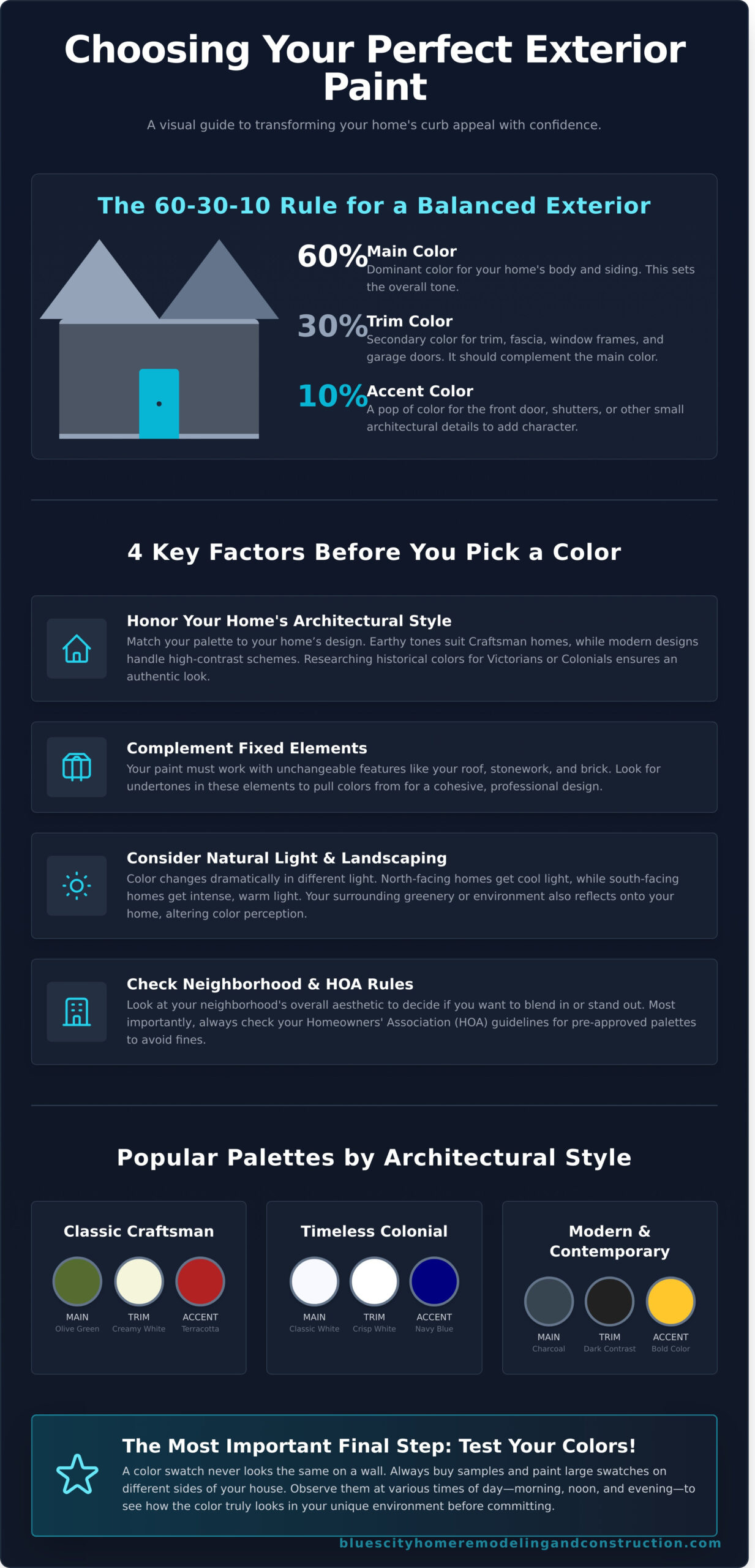
Building Your Palette: The 60-30-10 Rule for Exteriors
Choosing a single paint color is just the first step. A truly stunning home exterior features a balanced and cohesive palette. At Blues City Home Remodeling and Construction, we know the secret to achieving this professional look is a classic design principle that works perfectly for exteriors. By following what designers call The 60-30-10 Rule, you can easily transform your initial inspiration into a complete, well-proportioned color scheme. This simple formula removes the guesswork and helps you organize your exterior paint color ideas into a harmonious trio.
The rule breaks down your palette into three key components, ensuring each color serves a distinct purpose without overwhelming the others.
60% – Your Dominant Color (Siding)
This is the main event-the color that will cover the largest surface area of your home, such as the siding, stucco, or primary brick color. It establishes the overall mood and character of your house. Because it covers about 60% of the visible exterior, this color should be one you love and that fits well within your neighborhood’s aesthetic. It’s the foundation upon which your entire palette is built.
30% – The Secondary Color (Trim)
Making up roughly 30% of your exterior, the secondary color provides contrast and interest. This shade is typically used for the following areas:
- Window and door trim
- Fascia boards and soffits
- Gables and other architectural details
This color should complement your dominant siding color. A crisp white or off-white is a timeless, no-fail choice that makes any main color pop. For a more modern or dramatic effect, consider a dark secondary color like charcoal gray or black to create a bold, sophisticated outline.
10% – The Accent Color (Door & Shutters)
The final 10% is where you can truly inject personality and boost your home’s curb appeal. This “pop” of color is reserved for the smallest details, making it the perfect place to be bold. The front door is the most popular spot for an accent color, but it can also be used on shutters or other small decorative elements. Choose a shade that contrasts beautifully with both your siding and trim. A classic example is a deep gray house (60%) with clean white trim (30%) and a vibrant cherry-red front door (10%).
Trending Exterior Paint Colors to Watch
While classic color schemes are always a safe bet, exploring current trends can provide fresh inspiration for your home’s facade. The latest popular palettes reflect a collective shift towards warmth, nature, and subtle drama. These are not fleeting fads but rather modern interpretations of timeless hues, ensuring your home looks current while maintaining long-lasting appeal. If you want a look that feels both contemporary and enduring, consider these trending exterior paint color ideas.
Warm Whites and Off-Whites
The era of stark, cool whites is giving way to softer, creamier alternatives. Warm off-whites, like alabaster or Swiss coffee, create a gentle, welcoming facade that avoids looking harsh in bright, direct sunlight. This sophisticated backdrop pairs beautifully with natural materials like wood shutters or stone accents, as well as the crisp contrast of black window frames and gutters. The result is a home that feels both clean and inviting.
Earthy Greens and Moody Blues
Colors pulled directly from nature continue to dominate exterior design. These hues effortlessly connect your home to its surrounding landscape, creating a harmonious and grounded feel. Consider shades like:
- Sage Green: A soft, calming choice that feels organic and serene.
- Olive Green: A deeper, richer tone that evokes a sense of earthy stability.
- Navy and Slate Blue: These moody blues offer a classic yet bold alternative to black, providing depth and timeless elegance.
Charcoal, Greige, and Warm Grays
Gray remains a popular neutral, but the trend has shifted towards warmer, more complex undertones. Greige, a perfect fusion of gray and beige, is incredibly versatile and pairs well with almost any accent color or material. For a bolder statement, deep charcoal provides a soft, sophisticated alternative to a severe black. These updated neutrals deliver a modern, grounded look that is both stylish and highly adaptable.
Ultimately, these trends are about creating a home exterior that feels personal, sophisticated, and connected to its environment. When you’re ready to explore these palettes and transform your home’s curb appeal, the experts at Blues City Home Remodeling and Construction can help you select the perfect colors for a stunning result.
From Idea to Reality: How to Test and Finalize Your Choice
You’ve browsed countless exterior paint color ideas and narrowed down your favorites. Now comes the most critical step: testing. Never, ever choose a final color based on a small paper paint chip from the store. The way a color looks on a tiny square under fluorescent lighting is completely different from how it will appear across your entire home in natural sunlight. This final phase of testing is your insurance against painter’s remorse and ensures you’ll love the result for years to come.
Always Buy Samples
The first rule of finalizing a color is to invest in sample pots. Purchase samples of your top two or three main color contenders, along with a sample for your chosen trim color. Paint large swatches-at least two feet by two feet-directly on your siding. If you’re hesitant to paint on your house, you can use large poster boards and move them around. This allows you to see how the colors interact with your home’s existing materials like brick, stone, or roofing.
Observe in Different Lighting Conditions
Color is a reflection of light, and exterior light changes constantly. To get a true feel for your samples, you must observe them throughout the day and in different weather. Make sure to:
- View the swatches in the bright morning sun and the warm afternoon light.
- See how they look on an overcast or cloudy day.
- Paint swatches on a side of the house that gets direct sun and one that’s mostly in the shade.
Live with your samples for at least a few days. You’ll be amazed at how a color that looks perfect in the morning can feel too bright or washed out in the afternoon. This patience pays off.
Why Professional Application Matters
Once you’ve locked in your perfect color, the final step is a flawless application. While DIY is an option, the value a professional painter brings is immense. Experts say that proper prep work-scraping, sanding, and priming-is 90% of a long-lasting paint job. Professionals have the right equipment for a smooth, durable finish and understand how different surfaces, from wood siding to stucco, absorb paint. They ensure your chosen color looks exactly as you envisioned. Ready for a flawless finish? Get a professional painting quote today.
Your Home’s Stunning Transformation Awaits
Choosing the perfect paint for your home is an exciting journey. As we’ve explored, success lies in more than just picking a pretty swatch. By considering key factors like your home’s architectural style, applying design principles like the 60-30-10 rule, and properly testing your final choices, you can ensure a balanced and harmonious result. This thoughtful approach is what turns your favorite exterior paint color ideas into a stunning reality you’ll love for years to come.
When you’re ready to bring that vision to life, professional execution makes all the difference. The team at Blues City Home Remodeling and Construction is committed to customer satisfaction, bringing expert craftsmanship and years of home remodeling experience to every project in the Bartlett, TN area. A new palette is your opportunity to express your style and dramatically boost your home’s curb appeal.
Frequently Asked Questions
What are the most popular exterior house colors?
Timeless neutrals consistently dominate popular exterior paint color ideas. Shades like warm off-whites, versatile greiges (a mix of gray and beige), and classic light grays are top choices for siding. For a touch of modern contrast, many homeowners opt for darker accents, such as charcoal gray or even black on trim and shutters. Navy blue front doors also remain a perennial favorite, adding a welcoming pop of color that complements most neutral palettes and boosts curb appeal.
Should my exterior trim be lighter or darker than the siding?
This choice depends on the architectural style and desired effect. A lighter trim, typically classic white or cream, creates a crisp, traditional look that sharply defines your home’s features, like windows and gables. Conversely, a darker trim provides a more modern, dramatic effect, grounding the house and adding visual weight. For example, a light gray house with white trim appears classic, while a beige house with a dark bronze trim feels more contemporary and substantial.
What paint finish is best for a home’s exterior (satin, semi-gloss)?
For the main siding, a satin or eggshell finish is often the best choice. It offers a low-lustre look that helps hide minor surface imperfections while still being durable and easy to clean. For trim, shutters, and doors, a semi-gloss finish is ideal. Its higher sheen provides superior resistance to moisture and wear, making it perfect for high-touch areas. The gloss also creates an attractive contrast against the lower-sheen siding, making architectural details pop.
How often should you repaint your house exterior?
As a general guideline, a home’s exterior should be repainted every 5 to 10 years. However, this can vary significantly based on several factors. The quality of the previous paint job, the type of surface being painted (wood may need attention every 3-7 years, while stucco can last longer), and your local climate all play a crucial role. Homes in areas with harsh sun, extreme temperatures, or high moisture will likely require more frequent repainting to stay protected.
Can you paint vinyl or aluminum siding?
Yes, you can successfully paint both vinyl and aluminum siding, which is a great way to update your home’s look without a full replacement. The key to a lasting finish is proper preparation. The siding must be thoroughly cleaned to remove dirt and chalking. It is also crucial to use a high-quality acrylic latex paint specifically formulated for these surfaces. For vinyl, select a “vinyl-safe” color that is no darker than the original to prevent warping from heat absorption.
What is the best exterior paint color to sell a house?
To appeal to the widest range of potential buyers, neutral colors are your safest and most effective bet. The best exterior paint choices for selling a house include warm off-whites, light grays, and versatile greiges. These shades create a clean, inviting look and act as a blank canvas for buyers. A fresh coat in one of these colors, paired with a classic front door color like black or a deep navy, can significantly boost curb appeal and perceived value.