The decision to bring family closer, whether it’s aging parents needing support or an adult child seeking independence, is a heartfelt one. But it often comes with a major logistical challenge: where will everyone live? You want them near, but you also value your privacy-and so do they. The idea of an in-law suite addition can feel like the perfect answer, but the path from concept to reality can be daunting, filled with worries about spiraling costs, complex building codes, and the stress of a major renovation.
Consider this your comprehensive roadmap to peace of mind. In this guide, we’ll demystify the entire process, providing an expert-led checklist that covers everything you need to know. We’ll break down realistic budgets and potential ROI, explore smart design options that enhance privacy and comfort, and help you navigate the legal requirements with confidence. By the end, you’ll be fully equipped to create a beautiful, functional space that increases your property value and keeps your loved ones comfortably close.
Phase 1: Planning and Budgeting Your In-Law Suite
A successful in-law suite addition begins with a solid plan. Before breaking ground, it’s crucial to define your project’s purpose, scope, and financial framework. Are you creating a comfortable space for aging parents, a semi-independent home for an adult child, or a source of rental income? Your answer will shape every decision, from layout to financing. A well-planned suite not only meets your immediate needs but also enhances your property’s long-term value and resale appeal.
Defining Your Needs vs. Wants
Start by separating the absolute must-haves from the nice-to-haves. A collaborative discussion with all family members involved is key to ensuring the space is functional and comfortable for its intended occupant. Prioritize the essentials to create a truly livable space.
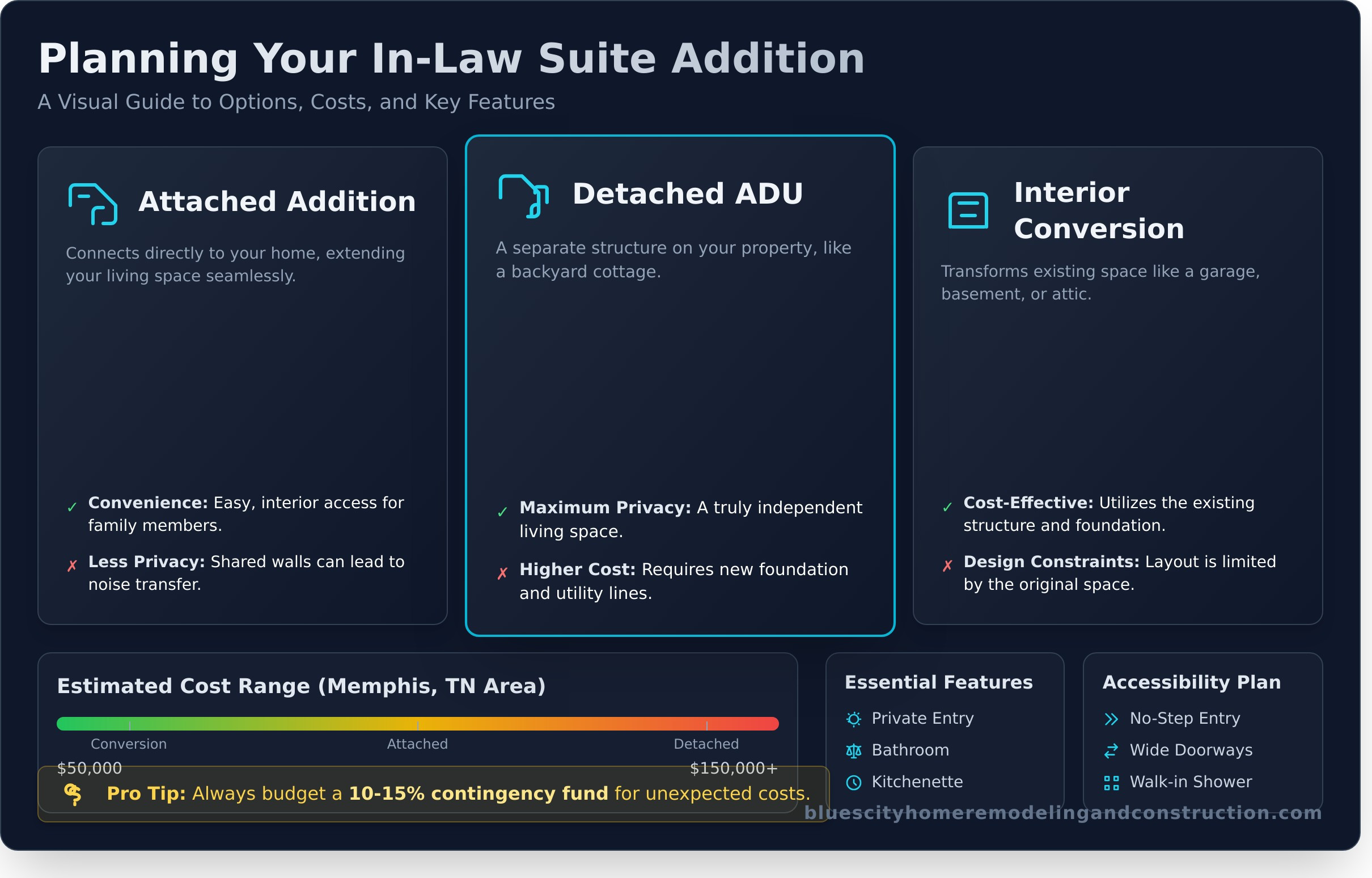
- Essential Features: A full bathroom, a functional kitchenette (sink, mini-fridge, microwave), and a separate, private entrance are typically non-negotiable.
- Accessibility: Plan for the future. Consider incorporating universal design principles like a no-step entry, wider doorways (36 inches), and a walk-in shower.
- Privacy and Size: Discuss privacy expectations openly. Determine an appropriate square footage that allows for comfort without feeling cramped, based on the occupant’s lifestyle.
Understanding the Costs: What to Expect
Your all-in budget must account for more than just construction. In the Memphis, TN area, costs can range from $50,000 for a garage conversion to over $150,000 for a new detached unit. Key factors include size, quality of finishes, and whether you are converting existing space or building new. Remember to budget for ‘soft costs’ like architectural plans, land surveys, and city permit fees. Most importantly, set aside a contingency fund of 10-15% to cover unexpected challenges that inevitably arise.
Exploring Your Options: Attached, Detached, or Converted
There are three fundamental approaches to adding an in-law suite. An attached addition connects directly to your home, offering convenience and easy access. A detached structure, often called an Accessory Dwelling Unit (ADU) or a secondary suite, provides maximum privacy but may have higher infrastructure costs for plumbing and electricity. Finally, an interior conversion transforms a garage, basement, or attic into a living space, often making it the most cost-effective option.
With your needs defined and a preliminary budget in mind, you can explore financing. Many homeowners leverage home equity loans (HELOCs), cash-out refinances, or construction-to-permanent loans to fund their in-law suite addition. Consulting with a financial advisor can help you choose the best path for your situation.
Phase 2: Design and Layout Essentials for a Functional Suite
Once you’ve navigated the initial planning and legalities, the design phase brings your vision to life. The goal for a successful in-law suite addition is to create a space that feels like a complete, self-sufficient home, not just a spare room. This means striking a delicate balance between comfort, independence, and connection to the main house. Thoughtful design ensures the suite serves its purpose for years to come, adapting to changing needs while enhancing your property’s value.
Must-Have Spaces and Features
A functional layout is built around four key areas. The kitchenette should prioritize efficiency, often including a two-burner cooktop, a combination microwave/convection oven, and an under-counter refrigerator. The bathroom must be designed for safety, featuring essentials like a walk-in or zero-threshold shower, grab bars, and a comfort-height toilet. The combined living and sleeping area should be flexible, using built-in storage and large windows to maximize space and natural light. Finally, a separate entrance is crucial; it provides autonomy for the occupant and minimizes disruption for everyone in the main home. This feature is often a key component outlined in local ADU law and regulations.
Universal Design for Accessibility and Aging in Place
Incorporating universal design principles from the start ensures the suite is safe and accessible for anyone, regardless of age or mobility. This forward-thinking approach is a cornerstone of any modern in-law suite addition. Key elements include:
- Zero-threshold entryways and wider doorways (at least 36 inches) to accommodate walkers or wheelchairs.
- Lever-style door handles and single-lever faucets, which are easier to operate than traditional knobs.
- Non-slip flooring, especially in the bathroom and kitchen, to reduce the risk of falls.
- Strategic task lighting under cabinets and in hallways to improve visibility and safety.
Maximizing Privacy for Everyone
Privacy is paramount for maintaining harmony. Consider a separate HVAC system to give the occupant independent control over their climate. In shared walls, use sound-dampening insulation to minimize noise transfer between the suite and the main house. If possible, extend this privacy outdoors by designing a small, dedicated patio or deck area. These thoughtful details ensure everyone feels comfortable and respected in their own space.
See how we design additions that respect your family’s space.
Phase 3: Navigating Zoning, Permits, and Legal Requirements
Once you have a design, the next stage involves navigating the legal landscape. This is often the most complex part of an in-law suite addition, where a deep understanding of local codes is non-negotiable. Getting this phase right ensures your project is legal, safe, and avoids costly fines or delays down the road.
Understanding Local ADU Regulations
Most in-law suites are legally classified as Accessory Dwelling Units (ADUs). Municipalities have specific rules governing them to manage density and neighborhood character. You’ll need to understand key zoning terms like setbacks (how far the structure must be from property lines), lot coverage (the percentage of your lot covered by buildings), and height restrictions. For a clear overview of what these entail, the City of Salem offers an excellent guide on Accessory Dwelling Unit Regulations that outlines these common requirements. In our area, you can find specific rules by visiting the Shelby County or City of Bartlett planning department websites.
The Building Permit Application Process
Before any construction begins, you must obtain a building permit. This process ensures your plans comply with building codes for safety and structural integrity. Your application package will typically include:
- Completed permit application forms
- Detailed architectural and structural plans
- A site plan showing the new structure on your property
- Electrical, plumbing, and mechanical plans
After submission, a plan reviewer will check for compliance. They may require revisions before approval. Once construction starts, inspectors will visit at key milestones (foundation, framing, final) to verify the work is up to code. A professional contractor handles this entire complex process, from submission to final inspection, ensuring a smooth and compliant build. At Blues City Home Remodeling, we manage all permitting and inspections for our clients.
HOA and Neighborhood Covenants
Finally, don’t forget your Homeowners Association (HOA). HOA rules are separate from and often stricter than city zoning codes. Before finalizing your in-law suite addition, submit your plans to your HOA board and get written approval. They may have specific restrictions on exterior materials, paint colors, rooflines, and even the size of the addition to maintain neighborhood uniformity. Ignoring this step can lead to forced removal of the structure at your own expense.
Phase 4: Hiring the Right Contractor and Finalizing Plans
With your designs, budget, and permits sorted, you’ve reached the most critical step: selecting the right building partner. The contractor you hire will be responsible for turning your vision into a functional, beautiful space. Thoroughly vetting candidates is non-negotiable for a successful in-law suite addition and a positive construction experience.
What to Look for in a Home Addition Specialist
Not all contractors are created equal. You need a specialist with proven experience in building home additions. As you interview potential companies, use this checklist to guide your decision:
- Credentials: Verify they hold a current contractor’s license and carry both general liability insurance and workers’ compensation coverage. Ask for proof.
- Relevant Portfolio: Request to see examples of similar addition projects they have completed. This demonstrates their capability and helps you assess the quality of their work.
- Client References: Speak directly with 2-3 past clients about their experience. Ask about communication, budget adherence, and overall satisfaction.
- Local Expertise: A contractor familiar with local building codes and permitting processes can prevent costly delays.
Reviewing Bids and Signing a Contract
When comparing bids, look beyond the final number. The most detailed proposal is often the most accurate. A low bid might exclude essential items that will appear later as expensive change orders. Your contract is your primary protection, so ensure it clearly outlines:
- A detailed scope of work, listing all materials and finishes.
- A clear payment schedule tied to project milestones.
- A realistic project timeline with a start and estimated completion date.
- A formal process for handling change orders and unforeseen costs.
Never sign an incomplete contract. A trustworthy professional will provide a comprehensive document and be happy to review it with you line by line.
The Pre-Construction Kick-Off
Once you’ve signed a contract, a pre-construction meeting aligns everyone before work begins. This meeting typically includes you, the project manager, and the lead carpenter. Key topics include establishing daily work hours, protocols for site access, and a communication plan. You should leave this meeting knowing exactly who your primary point of contact is for all questions and updates. This simple step sets the foundation for a collaborative and transparent project. Ready to find a trustworthy partner? Talk to our team today.
Your In-Law Suite Journey Starts Here
Building a new living space is a major undertaking, but as we’ve covered, success lies in meticulous planning, thoughtful design, and navigating the necessary legal requirements. Embarking on an in-law suite addition is a significant investment in your property and your family’s future, and having the right partner can transform this complex process into a rewarding experience.
If you’re ready to take the next step, our team is here to help. As experienced home addition contractors in the Memphis area with an A+ Rating with the Better Business Bureau, we are committed to quality craftsmanship and professionalism. We will guide you from the initial concept to the final construction, ensuring your vision becomes a beautiful reality.
Ready to plan your in-law suite addition? Schedule a free consultation with our experts.
Let’s work together to create a functional, comfortable, and welcoming space for your loved ones.
Frequently Asked Questions
How much value does an in-law suite addition add to a home?
An in-law suite addition can significantly boost your property’s market value, often by 20% to 30%. The return on investment depends on your local market, the quality of the build, and its potential for rental income. In high-demand areas, a well-designed suite with a separate entrance is highly attractive to buyers, including multigenerational families and those seeking a source of passive income, which can lead to a faster sale and a higher selling price.
How long does it typically take to build an in-law suite from start to finish?
The timeline varies based on project complexity. A simple interior conversion may take 2-4 months, while a detached new-build unit can take 6-12 months or more. This timeframe includes the initial design and architect phase, securing municipal permits, the construction itself, and final inspections. Unforeseen delays like weather or supply chain issues can extend the schedule, so it’s wise to plan for a buffer when creating your timeline.
What is the legal difference between an in-law suite and an Accessory Dwelling Unit (ADU)?
While often used interchangeably, “Accessory Dwelling Unit” (ADU) is the formal legal and zoning term used by most municipalities. An “in-law suite” is a more informal description of the unit’s function. To be legally compliant, your in-law suite must meet the specific local ADU codes regarding size, kitchen facilities, a separate entrance, and occupancy. Always check your city’s zoning regulations to ensure your project plans are fully compliant before you begin building.
How can I finance an in-law suite addition?
Several popular financing options exist. You can leverage your home’s equity through a home equity loan or a Home Equity Line of Credit (HELOC). A cash-out refinance replaces your current mortgage with a larger one, providing you with the difference in cash. For larger, ground-up projects, a construction loan may be the best fit. Some homeowners may also use personal savings or a personal loan for smaller-scale renovations or conversions.
Does an in-law suite need its own separate utility meters?
This depends entirely on local building codes and your intended use for the space. If you plan to rent the unit to a non-family tenant, most jurisdictions will require separate meters for electricity, water, and gas for accurate billing. For a suite occupied by a family member, connecting to the main house’s utilities is often permitted and is a more cost-effective solution. Always confirm the requirements with your local building department first.
Can I build an in-law suite myself or do I need a licensed contractor?
While an experienced DIYer can handle finishing touches like painting or flooring, most of the project requires licensed professionals. Work involving plumbing, electrical, and structural changes must typically be performed by licensed contractors to meet safety codes and pass inspections. Hiring a general contractor ensures the project is managed correctly, properly insured, and receives a final certificate of occupancy, protecting your investment and ensuring its legality and safety.
Are there specific tax implications for adding an in-law suite?
Yes, there are two primary tax implications. First, your property’s assessed value will increase, which will lead to a rise in your annual property taxes. Second, if you rent the unit out, you must report the rental income to the IRS. However, you can also deduct a portion of your property expenses, such as mortgage interest, insurance, and repairs, against that income. It is highly recommended to consult a tax advisor for personalized guidance.