Dreaming of a new kitchen is exciting, but the thought of weeks of dust, takeout dinners, and disruption can be daunting. You’re probably asking yourself, how long does a kitchen remodel take, and will it *really* stick to the schedule? The fear of unexpected delays and living in a construction zone is a major source of stress for any homeowner, often leaving you feeling overwhelmed before the first hammer even swings. It’s the number one question that can turn a dream project into a source of anxiety.
That’s where this guide comes in. We’re pulling back the curtain to give you a realistic, phase-by-phase timeline, from the initial design consultation to the final, gleaming walkthrough. We’ll break down each step, highlight the common factors that can impact your schedule, and empower you with the knowledge to manage your expectations. By the end, you’ll have a clear understanding of the entire process, helping you plan with confidence and navigate your renovation with far less stress.
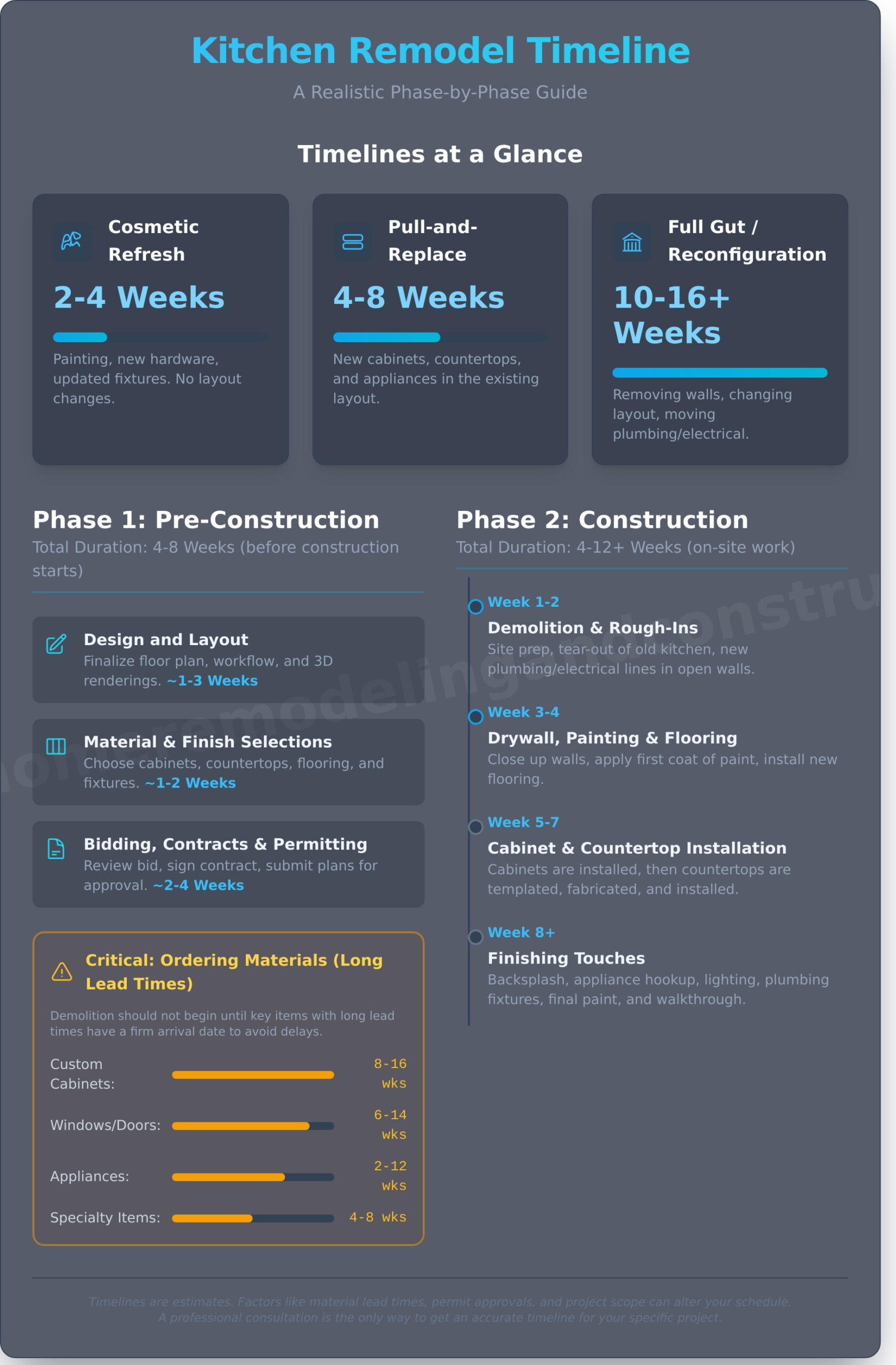
Kitchen Remodel Timelines at a Glance: From Cosmetic to Full Gut
So, how long does a kitchen remodel take? The short answer is anywhere from 2 weeks for a simple cosmetic refresh to 4+ months for a major reconfiguration. It’s crucial to remember that the total timeline isn’t just the construction phase; it also includes the essential planning, design, and material procurement stages that happen before a single hammer is swung. Understanding the full scope of a Renovation is the first step to setting realistic expectations.
To give you a clearer picture, here are typical timelines based on the scope of work:
- Cosmetic Refresh: 2-4 Weeks
- Pull-and-Replace Remodel: 4-8 Weeks
- Full Gut Remodel / Reconfiguration: 10-16+ Weeks
Keep in mind these are estimates. Factors like contractor availability, material lead times, and permit approvals can alter your specific schedule. A professional consultation is the only way to get an accurate timeline for your project.
Cosmetic Refresh (2-4 Weeks)
This is the fastest and most affordable way to update your kitchen. A cosmetic refresh typically involves projects that don’t alter the existing layout, such as painting cabinets, replacing hardware, installing a new faucet, or updating light fixtures. Because there are no major plumbing, electrical, or structural changes, the construction phase is brief. However, you still need to plan for ordering materials and scheduling labor.
Pull-and-Replace Remodel (4-8 Weeks)
This is the most common type of kitchen remodel. It involves removing and replacing major components within the kitchen’s existing footprint. Think new cabinets, countertops, and appliances, all installed in their original locations. The timeline for this project is longer due to factors like custom cabinet lead times (which can take weeks) and the precise process of templating, fabricating, and installing new countertops.
Full Gut Remodel / Reconfiguration (10-16+ Weeks)
If your project involves removing walls, changing the kitchen’s layout, or moving plumbing and electrical lines, you’re looking at a full gut remodel. Answering “how long does a kitchen remodel take” for this scope is complex because of the many variables. Structural changes, building permits, and multiple inspections add significant time. This extensive process requires meticulous planning with architects, designers, and contractors to ensure a smooth, albeit lengthy, transformation.
Phase 1: The Critical Pre-Construction Stage (4-8 Weeks)
Before a single hammer swings, the most crucial work begins. Many homeowners focus only on the construction timeline, but this planning phase is where your project’s success is truly determined. Rushing through these initial steps is the number one cause of budget overruns and frustrating delays down the line. A thorough and thoughtful plan sets the foundation for a smooth project, providing a much clearer answer to the question of how long does a kitchen remodel take from start to finish.
Design and Layout (1-3 Weeks)
This is where your vision takes shape on paper. You’ll work closely with a designer or your contractor to finalize the floor plan, ensuring an efficient workflow between your sink, stove, and refrigerator-the classic “kitchen triangle.” 3D renderings are invaluable at this stage, allowing you to visualize appliance placement, island size, and the overall feel of the space before committing to costly decisions.
Material and Finish Selections (1-2 Weeks)
Your choices here directly impact both budget and schedule. You’ll be selecting every detail, from cabinets and countertops to flooring, backsplash, and lighting fixtures. The speed of your decision-making is a critical factor; a decisive homeowner can keep the project moving forward, while prolonged indecision can add weeks to the timeline. Your contractor can provide expert guidance and recommend trusted local showrooms to streamline the process.
Bidding, Contracts, and Permitting (2-4 Weeks)
Once designs and selections are finalized, your contractor will provide a detailed, itemized bid for your review. After signing the contract, the official plans are submitted to your local municipality, such as Bartlett or Memphis, for the necessary building permits. Be aware that permit approval times can vary significantly depending on the city’s workload and are outside of your contractor’s control.
Ordering Materials (Varies Greatly)
With permits pending, we place orders for all materials, especially those with long lead times. Demolition should never start until key components are delivered or have a firm arrival date. This single step prevents having a torn-apart, unusable kitchen while waiting for delayed items. Lead times are a major variable that affects how long a kitchen remodel takes overall.
- Custom Cabinetry: 8-16 weeks
- Appliances: 2-12 weeks, depending on stock
- Windows and Doors: 6-14 weeks
- Specialty Tile or Countertops: 4-8 weeks
Phase 2: The Construction Process, Week by Week (4-12+ Weeks)
Once the design is finalized and materials are ordered, the active construction phase begins. This is where your vision starts to become a reality, but it’s also the most disruptive part of the project. The total duration of this phase is one of the biggest variables in determining how long does a kitchen remodel take, as it depends heavily on the project’s complexity, from simple cosmetic updates to a full gut renovation. Here is a typical week-by-week breakdown.
Week 1-2: Demolition and Rough-Ins
The first step is preparing the job site. We protect adjacent rooms with plastic sheeting and floor coverings to contain dust and debris. Next comes demolition, where old cabinets, countertops, flooring, and any non-structural walls are removed. Once the space is a blank slate, our licensed electricians and plumbers perform the “rough-in” work, running new wiring, plumbing lines, and any necessary HVAC ductwork inside the open walls to match the new layout.
Week 3-4: Drywall, Painting, and Flooring
With the internal systems in place, we close up the walls and ceiling with new drywall. This multi-day process involves hanging, taping, mudding, and sanding to create a smooth, seamless surface. A first coat of primer and paint is often applied now, as it’s much easier to paint before cabinets are installed. Following this, your new flooring-whether it’s hardwood, tile, or LVP-is installed to create a finished foundation for the rest of the kitchen.
Week 5-7: Cabinet and Countertop Installation
This is a major milestone where the kitchen truly takes shape. Your new cabinets are delivered and professionally installed, carefully leveled, and secured. As soon as the base cabinets are in, a technician creates a precise digital template for your countertops. Note: There is typically a 1-2 week lead time between templating and installation while your stone or quartz slab is custom fabricated. This is a standard and crucial waiting period.
Week 8-10+: Finishes, Fixtures, and Punch List
The final stretch involves installing the details that make your kitchen functional and beautiful. This includes:
- Connecting appliances like the refrigerator, oven, and dishwasher.
- Installing the sink, faucet, and garbage disposal.
- Mounting lighting fixtures and installing the backsplash tile.
- Final paint touch-ups and installing all cabinet hardware (pulls and knobs).
The process concludes with a final walkthrough to create a “punch list” of any minor adjustments needed. A professional team from Blues City Home Remodeling & Construction ensures this final step is meticulous, guaranteeing every detail meets your expectations.
What Causes Kitchen Remodel Delays? (And How to Avoid Them)
Even with a perfect plan, unforeseen issues can arise. The fear of a project spiraling off schedule is one of the biggest sources of stress for homeowners. But the key to staying on track isn’t hoping for the best-it’s planning for the worst. An experienced contractor anticipates potential roadblocks and builds strategies to navigate them, keeping your project moving forward.
Understanding these common culprits is the first step to avoiding them and getting a more accurate answer to how long does a kitchen remodel take. Here are the most frequent causes of delays:
Changing Your Mind Mid-Project
Finalizing every detail, from cabinet hardware to grout color, before demolition begins is critical. A seemingly small change mid-stream can trigger a “change order,” which impacts both your budget and timeline. For example, deciding to move an island after the plumbing and electrical are already in place creates a ripple effect, requiring multiple trades to redo their work and delaying subsequent steps.
Material Availability and Lead Times
The post-pandemic supply chain has made lead times a major factor. Custom cabinets, specialty appliances, and unique tile can take weeks or even months to arrive. A proactive contractor will order these long lead-time items at the very start of the project. We also advise clients to select a backup for key finishes, so an unexpected stock issue doesn’t bring the entire remodel to a halt.
Unexpected Structural or Mechanical Issues
What lies behind your walls is the biggest unknown. Tearing out old cabinets and drywall can reveal hidden problems like water damage, faulty wiring, or pest infestations. These issues aren’t optional fixes; they must be addressed for safety and code compliance. This is why a 10-15% contingency fund and a small time buffer in the schedule are essential for a smooth process.
Permitting and Inspection Hold-Ups
Permits and inspections are non-negotiable steps that ensure your kitchen is safe and built to last. However, city inspectors operate on their own schedules, which can introduce pauses in the workflow. If an inspection fails, all work must stop until the issue is corrected and re-inspected. Working with a licensed, reputable contractor ensures the work is done correctly the first time, minimizing the risk of a failed inspection.
While some surprises are inevitable, most delays can be managed or prevented entirely. A detailed, professional plan from an experienced contractor like Blues City Remodeling is your best defense against a project going off the rails and the key to controlling how long a kitchen remodel takes.
Bringing Your Dream Kitchen to Life on Schedule
As we’ve seen, the answer to how long does a kitchen remodel take is rarely a simple number. It’s a journey with two distinct, crucial parts: the pre-construction planning phase and the hands-on construction work. A successful project that stays on track hinges on meticulous preparation, from finalizing designs to ordering materials well in advance. Understanding this timeline and anticipating potential delays are the first steps toward a stress-free renovation.
Navigating this complex process is where an experienced partner makes all the difference. Serving the Bartlett & Memphis area with integrity, our team at Blue’s City Home Remodeling and Construction prides itself on detailed project schedules and transparent communication. We have years of experience managing complex renovations, ensuring your project is completed efficiently and to the highest standard.
Ready to plan your project with a team you can trust? Schedule a consultation with our Bartlett team. The path to your dream kitchen is a significant undertaking, but with expert guidance, the beautiful and functional result is always worth the wait.
Frequently Asked Questions
Can I live in my house during a kitchen remodel?
Yes, it is possible to live in your house during a remodel, but it requires careful planning. Be prepared for significant dust, noise, and disruption. The biggest challenge will be the lack of a functional kitchen for cooking and cleaning. For extensive renovations that affect other living areas or involve major structural work, many homeowners find it more comfortable to arrange temporary accommodation, especially if they have children or pets, to escape the construction zone.
How can I set up a temporary kitchen during the renovation?
Create a functional temporary kitchen in another room, like a dining room or garage. Move your old refrigerator there and rely on small countertop appliances such as a microwave, slow cooker, electric skillet, and coffee maker. Use a large plastic tub for washing dishes in a bathroom sink or bathtub. To minimize cleanup, consider using disposable plates and cutlery. A folding table can serve as a simple but effective counter space for meal preparation.
Does removing a wall add a lot of time to a kitchen remodel?
Absolutely. Removing a wall, especially a load-bearing one, significantly impacts how long a kitchen remodel takes. This step requires structural engineering assessments, new support beams, and city permits and inspections, which can add several weeks to the planning phase alone. It also involves rerouting electrical wiring, plumbing, and HVAC ducts. The additional labor for demolition, reframing, and finishing drywall and floors will extend the construction timeline considerably compared to a standard remodel.
What is a ‘punch list’ and why is it important?
A punch list is a document created near the end of the project that details any work that is incomplete or does not meet the agreed-upon standards. You and your contractor will walk through the kitchen and note any final items, such as a paint touch-up, a misaligned cabinet door, or a missing outlet cover. This list is crucial because it ensures all details are finalized to your satisfaction before you issue the final payment, formally concluding the project.
How much of a time buffer should I plan for in my kitchen remodel?
A smart rule of thumb is to add a time buffer of 15-20% to your contractor’s initial estimate. If your project is scheduled to take 10 weeks, you should realistically plan for it to last 11-12 weeks. This buffer accounts for common and unavoidable delays, such as backordered materials, subcontractor scheduling conflicts, unexpected structural issues discovered during demolition, or failed inspections. Planning for this extra time helps manage stress and expectations.
Why can’t construction start before my custom cabinets arrive?
Starting demolition before your custom cabinets are on-site is a major risk. The exact dimensions of your cabinets dictate the precise placement of everything else, including countertops, plumbing lines, and electrical outlets for lighting and appliances. If cabinets are delayed or arrive with incorrect measurements after work has begun, it can cause a costly domino effect of delays and rework. Waiting ensures that once the cabinets are installed, all subsequent steps can proceed smoothly and accurately.