Staring at a five-figure quote for a new roof can make any homeowner pause. You know it’s a critical component for protecting your home, but is it a smart financial investment, especially if you’re thinking of selling soon? It’s a high-stakes decision, leaving many to worry about the real impact of a new roof home value. You’re not just shielding your house from the elements; you’re making a significant bet on its curb appeal, future marketability, and your ultimate return on investment.
In this complete guide, we cut through the confusion to give you clear answers. We’ll break down the true financial return you can realistically expect from a roof replacement, explore which materials and features offer the biggest value boost, and help you confidently decide if a full replacement is a better choice than a simple repair. By the end, you’ll have the data and expert insights needed to justify the expense and make an informed decision that protects both your property and your wallet.
Key Takeaways
- Understand the national average return on investment for a roof replacement to calculate your potential profit.
- A new roof is a major selling point that directly impacts your new roof home value and can speed up your home’s sale.
- Discover how a new roof dramatically improves curb appeal, making a critical first impression on potential buyers.
- Learn the key factors, from material choice to market conditions, that determine if a new roof is the right investment for you.
The Bottom Line: How Much Value Does a New Roof Actually Add?
Let’s cut to the chase: a new roof is one of the most powerful selling points for your home. While it doesn’t offer the glamour of a kitchen remodel, it provides something far more valuable to a potential buyer: peace of mind. A new roof removes a massive, immediate expense and a major source of anxiety, making your home significantly more attractive on the market.
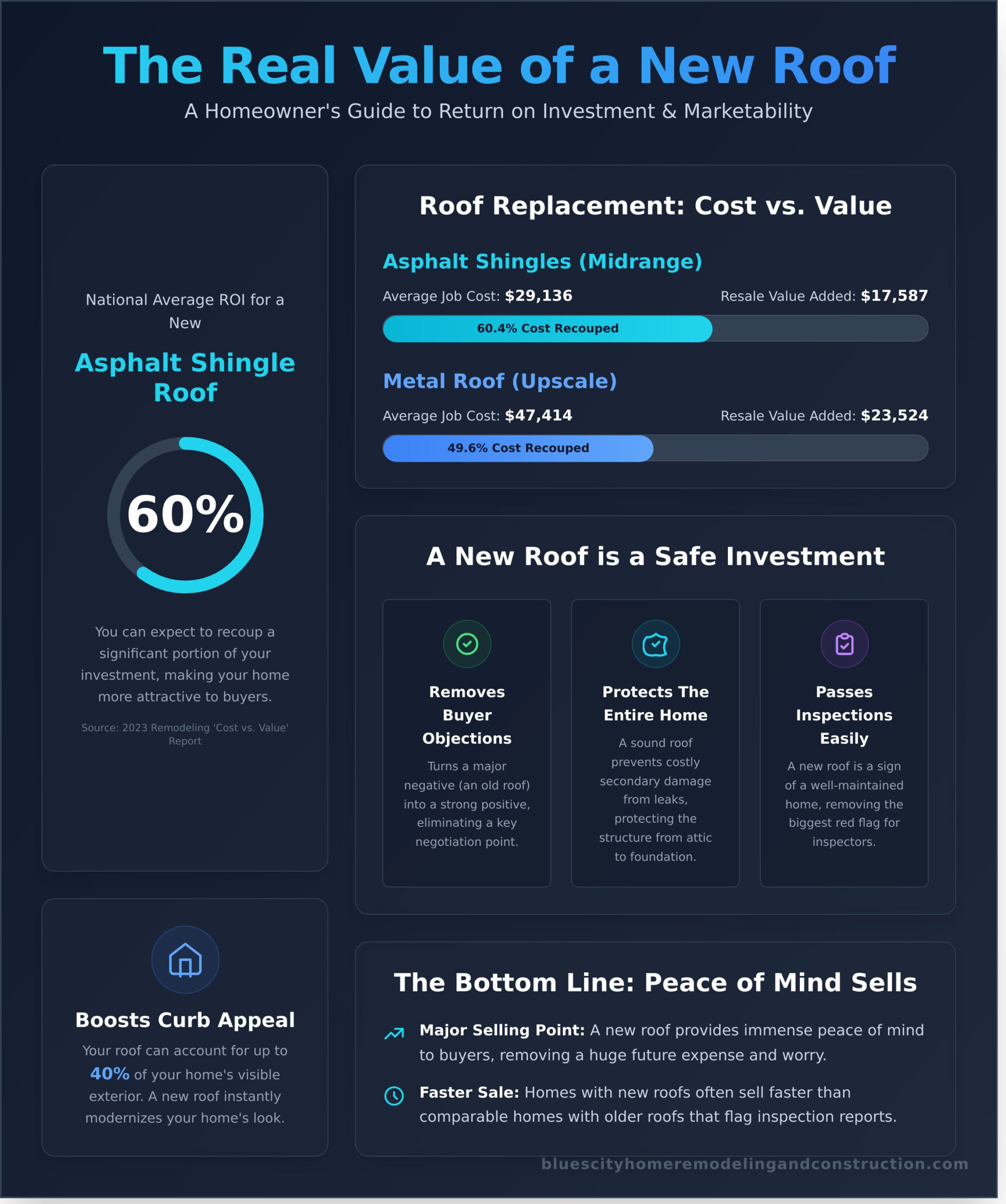
But what does that mean in dollars and cents? According to the respected 2023 Remodeling ‘Cost vs. Value’ report, homeowners can expect to recoup a significant portion of their investment. Nationally, the average return on investment (ROI) for a new asphalt shingle roof is approximately 60%.
This ROI isn’t just about adding to the final sale price; it’s about enabling a faster, smoother sale by eliminating a huge red flag during home inspections. The true impact of a new roof home value is often seen in how quickly a home sells compared to a similar property with an aging roof.
| Roof Type | Average Job Cost | Resale Value Added | Cost Recouped (ROI) |
|---|---|---|---|
| Asphalt Shingles (Midrange) | $29,136 | $17,587 | 60.4% |
| Metal (Upscale) | $47,414 | $23,524 | 49.6% |
Source: 2023 Remodeling ‘Cost vs. Value’ Report
Understanding Roof Replacement ROI Data
Return on Investment (ROI) in this context is the percentage of the roof’s cost that you recover in the form of increased home value upon selling. The ‘Cost vs. Value’ report calculates these figures by surveying real estate professionals on their perceived value of these upgrades. While these numbers are a crucial benchmark, they are just one factor in how home value is determined by appraisers and buyers. It’s important to set realistic expectations: you are unlikely to recoup 100% of the cost directly, but the project’s real value is in its ability to secure a better, faster offer.
Why a New Roof is a ‘Safe’ Investment
Unlike a trendy bathroom or a niche luxury feature, a roof is a fundamental necessity. An old, failing roof is a major liability that can scare away even the most interested buyers. Investing in a new one is considered a safe bet for several key reasons:
- It removes a major objection: Buyers see an old roof as a ticking time bomb for their wallet. A new roof turns a significant negative into a strong positive.
- It’s essential maintenance: This isn’t a luxury upgrade; it’s a core component of a safe, secure home. Appraisers and inspectors view it as a sign of responsible ownership.
- It protects everything else: A sound roof protects the home’s entire structure, from the attic to the foundation, preventing costly secondary damage from leaks.
Beyond ROI: The Hidden Benefits of a New Roof for Home Value
Focusing solely on the return on investment for a roof replacement can be misleading. While the latest Cost vs. Value Report provides excellent data on recouping your initial expense, the true impact on new roof home value extends far beyond that single number. A new roof is a powerful marketing tool that enhances your home’s overall saleability, providing intangible benefits that attract serious buyers and smooth the path to a successful closing.
Boosting Curb Appeal and First Impressions
Your roof can account for up to 40% of your home’s visible exterior, making it a dominant feature in its curb appeal. An old, stained, or curling roof can make an otherwise beautiful home look neglected and dated. Conversely, installing modern architectural shingles or a sleek metal roof can instantly update your home’s entire aesthetic, creating a powerful and positive first impression that draws buyers in from the moment they pull up to the curb.
Passing Home Inspections with Ease
For a home inspector, an old roof is one of the biggest red flags. It signals potential water damage, structural issues, and a significant upcoming expense for the buyer. This single issue can derail a sale or lead to stressful, last-minute negotiations for costly credits. A new, professionally installed roof provides critical peace of mind, essentially removing the biggest potential deal-breaker from the inspection report and showing buyers the home has been proactively maintained.
Lowering Insurance Premiums and Improving Energy Efficiency
The practical, long-term benefits of a new roof are a major selling point that indirectly boosts value. These advantages offer tangible savings for the new owner, making your property more attractive than a comparable home with an older roof. Key benefits include:
- Insurance Discounts: Many insurance providers offer significant premium reductions for homes with new roofs, especially those using impact-resistant materials.
- Enhanced Energy Efficiency: Modern roofing systems include superior ventilation and insulation, which helps regulate attic temperatures. This reduces the strain on HVAC systems, leading to lower monthly utility bills.
- Updated Warranties: A new roof comes with transferable manufacturer warranties, giving the buyer confidence and protection for decades to come.
What Factors Influence a New Roof’s ROI?
While industry reports provide average ROI figures, the actual financial return on your roofing project is not a fixed number. Several critical factors can significantly increase or decrease the impact a new roof home value has on your property’s final sale price. Understanding these variables allows you to make strategic decisions that maximize your investment.
Roofing Material: The Biggest Driver of Value
The material you choose is the single most significant factor influencing both upfront cost and long-term value. Each option caters to different budgets, architectural styles, and buyer expectations.
- Asphalt Shingles: As the most common roofing material in the U.S., architectural asphalt shingles offer the most reliable and expected ROI. They are affordable, attractive, and what most homebuyers anticipate seeing.
- Metal Roofing: Though it comes with a higher initial cost, metal roofing often yields a higher ROI due to its exceptional durability, 50+ year lifespan, and energy efficiency. These benefits are highly attractive to modern buyers, and some energy-efficient models may even qualify for incentives like the Energy Efficient Home Improvement Credit, adding another layer of financial value.
- Tile or Slate: These are luxury, high-end materials. While beautiful and incredibly long-lasting, their high cost means their ROI is heavily dependent on being installed on a home where such a premium feature is expected and appropriate for the neighborhood’s price point.
Local Market Conditions and Home Price Point
Your local real estate climate plays a huge role. In a hot seller’s market like we’ve recently seen in areas like Bartlett, TN, buyers may overlook an older roof to win a bidding war. However, in a balanced or buyer’s market, a brand-new roof becomes a powerful differentiator that can make your home sell faster and for a higher price. It’s also crucial to match the roof to the home’s value; a premium slate roof on a modest starter home is unlikely to recoup its cost.
Workmanship and Warranty
A poorly installed roof doesn’t add value-it creates a liability. Shoddy workmanship can lead to leaks and damage that will be flagged during a home inspection, potentially costing you the sale. Conversely, a professionally installed roof from a reputable contractor is an asset. A transferable warranty is an even bigger one. Offering the new owner written proof of quality and a long-term guarantee provides immense peace of mind and is a powerful marketing tool that directly enhances your new roof home value proposition.
Putting Your New Roof in Context: ROI vs. Other Upgrades
A new roof is a non-negotiable asset for a safe and secure home. But when it comes to maximizing your return on investment (ROI), how does it stack up against more glamorous projects? Understanding where a roof replacement fits into your overall remodeling strategy is key to making smart financial decisions. It’s about balancing essential repairs with value-adding upgrades.
ROI Showdown: Roof vs. Kitchen Remodel
Kitchens are often the heart of the home and a major selling point. A minor kitchen remodel can recoup over 85% of its cost at resale, while a new asphalt shingle roof typically sees an ROI of around 61%. While the kitchen numbers look better on paper, this comparison is only valid if your home’s core is sound. No buyer will be impressed by new countertops if there’s a water stain on the ceiling above them. A functional, leak-free roof is a prerequisite for any interior cosmetic upgrade.
ROI Showdown: Roof vs. Home Addition
Nothing adds direct value quite like increasing a home’s square footage. A home addition is a significant investment that can dramatically boost your property’s market price. Often, a new roof is a necessary part of this larger project to ensure a seamless and structurally sound integration from top to bottom. In this case, the roof’s cost becomes part of the addition’s overall value. Considering an addition? Let’s plan it together.
Creating a Prioritized Improvement Plan
To maximize your new roof home value and every other dollar you spend, we advise clients to approach projects in a logical order. A smart plan protects your investment and prevents costly rework down the line.
- 1. Address Critical Needs First: Start with the essentials that protect your entire home. This includes the roof, foundation, windows, and siding. These are non-negotiable for safety and structural integrity.
- 2. Focus on High-Impact “Wants”: Once the home is secure, move to high-ROI areas that buyers love. This is where kitchen and bathroom remodels shine, offering significant lifestyle and value boosts.
- 3. Enhance Curb Appeal: Finally, focus on cosmetic upgrades like new paint, professional landscaping, or a new front door. These finishing touches create a powerful and welcoming first impression.
By following a clear plan, you ensure every project, from the roof down, contributes effectively to your home’s overall worth. For help creating a strategic roadmap for your property, contact our team today.
Making the Right Decision: Your Roof Replacement Action Plan
Understanding the financial return is one thing; knowing when and how to act is another. A strategic approach to your roof replacement is crucial for maximizing its impact on your property’s appeal and final sale price. This framework will guide you from assessment to installation, ensuring you make a smart investment in your home’s future.
Repair or Replace? Key Questions to Ask
Before you start collecting quotes, determine if a full replacement is truly necessary. An honest assessment can save you thousands. If you notice any of the following, a replacement is likely your best option:
- Your roof is over 20 years old. Most asphalt shingle roofs have a lifespan of 20-25 years. If yours is approaching this age, it’s living on borrowed time.
- Damage is widespread. Are shingles curling, cracking, or losing granules across large sections? Isolated damage can be repaired, but systemic failure requires a full replacement.
- You see interior water damage. Stains on your ceiling or walls are a clear sign that the roof’s underlayment has failed, and a simple patch job won’t solve the underlying problem.
Timing the Replacement Before a Sale
If you plan to sell, timing is everything. Ideally, replace your roof 6-12 months before listing. This prevents last-minute scrambles and allows you to confidently market a key feature. Waiting until a buyer’s inspection uncovers issues puts you in a weak negotiating position and can delay or even kill the sale. When you do replace it, make it a star of your listing. Use phrases like “Brand new architectural shingle roof installed in 2024 with a transferable warranty.” This proactive step showcases pride of ownership and significantly boosts the perceived new roof home value.
Finding a Qualified Contractor
Choosing the right installer is as important as choosing the right materials. The quality of the installation directly impacts the longevity of your roof and the overall new roof home value. Don’t rush this critical step.
- Get at least three quotes. Compare bids from licensed, insured, and reputable local companies.
- Check references and past work. Ask for addresses of recent projects to see their work firsthand.
- Analyze the entire proposal. The lowest price isn’t always the best deal. Ensure the bid clearly outlines materials, warranty details, tear-off of the old roof, and cleanup procedures.
For a comprehensive, no-obligation quote, consider reaching out to a trusted local expert to ensure your project is handled professionally from start to finish.
Final Verdict: A New Roof is a Smart Investment for Your Home
Investing in a new roof is more than just a necessary repair; it’s a strategic upgrade. As we’ve explored, a new roof can recoup a significant portion of its cost at resale, directly boosting your property’s market price. But the benefits extend beyond simple ROI. The enhanced curb appeal, improved energy efficiency, and the sheer peace of mind it offers potential buyers are invaluable assets that can lead to a faster, more profitable sale. Ultimately, the positive impact on new roof home value is undeniable, making it one of the most reliable improvements a homeowner can make.
Ready to protect and enhance your most significant investment? As a fully Licensed & Insured General Contractor serving the Bartlett, TN area, we are driven by a commitment to quality craftsmanship. If you are planning a major home renovation, contact us for a comprehensive consultation and take the first step toward a more valuable and secure home.
Frequently Asked Questions
Should I replace my roof before selling my house, or give the buyer a credit?
Replacing the roof before selling is often the better strategy. A brand-new roof is a powerful marketing tool that can attract more buyers and lead to a faster sale. While a credit seems simpler, buyers may overestimate the replacement cost or be deterred by the hassle of a major project. A new roof with a transferable warranty provides peace of mind and can justify a higher asking price, maximizing your return on investment.
How much does a new roof for a 2000 sq ft house cost in Tennessee?
In Tennessee, the average cost to replace a roof on a 2000 sq ft house typically ranges from $8,000 to $15,000. The final price depends on several factors, including the roof’s pitch and complexity, the type of architectural shingles selected, and the specific contractor’s labor rates. To get an accurate figure for your home, it is essential to obtain detailed quotes from at least three licensed and insured local roofing companies.
Do home buyers really care about the age of a roof?
Yes, buyers care immensely about the age and condition of a roof. An old roof signals a large, impending expense and potential for future issues like leaks, which can scare away potential offers. A newer roof provides security and indicates the home is well-maintained. This confidence often translates into a higher perceived value for the property, making the investment in a new roof home value you can clearly see in your final sale price.
Can a bad roof cause a house to fail an FHA or VA appraisal?
Absolutely. A roof in poor condition is a common reason for failing an FHA or VA appraisal. These government-backed loan programs have strict safety and habitability standards. An appraiser will flag issues like active leaks, significant granule loss, or a roof with less than two years of remaining lifespan. If the roof is deemed deficient, the lender will almost always require repairs or a full replacement before approving the buyer’s loan.
What is the average lifespan of an architectural asphalt shingle roof?
Architectural asphalt shingles, also called dimensional shingles, are a durable option with an average lifespan of 25 to 30 years. This is a significant upgrade from older 3-tab shingles. However, factors like severe weather, direct sun exposure, and proper attic ventilation can impact longevity. Following a regular maintenance schedule is the best way to ensure your roof reaches its maximum expected lifespan and protects your home effectively throughout the years.
Will my homeowners insurance cover a new roof?
Homeowners insurance generally only covers a roof replacement if the damage was caused by a sudden event, such as a windstorm, hail, or a fallen tree. It does not cover replacement due to old age, general wear and tear, or a lack of maintenance. If you believe your roof has sustained storm damage, document it with photos and contact your insurance provider promptly to understand your coverage and begin the claims process.