Building your dream home should be one of the most exciting journeys of your life. But that excitement is often overshadowed by a nagging fear of spiraling budgets, shoddy workmanship, and a builder who doesn’t communicate. The sheer number of choices can feel overwhelming, making the question of how to choose a home builder the most stressful part of the process. The truth is, this single decision is the most important one you’ll make-it’s the very foundation your dream will be built upon.
Don’t let anxiety hijack your excitement. This complete vetting checklist is your roadmap to clarity and confidence. We’ll guide you through the essential steps to research, interview, and select a trustworthy professional who respects your vision and your budget. You’ll learn exactly what to look for, the right questions to ask, and how to spot red flags, ensuring you find a partner who will bring your dream home to life with the quality and peace of mind you deserve.
Step 1: Laying the Groundwork – Initial Research and Shortlisting
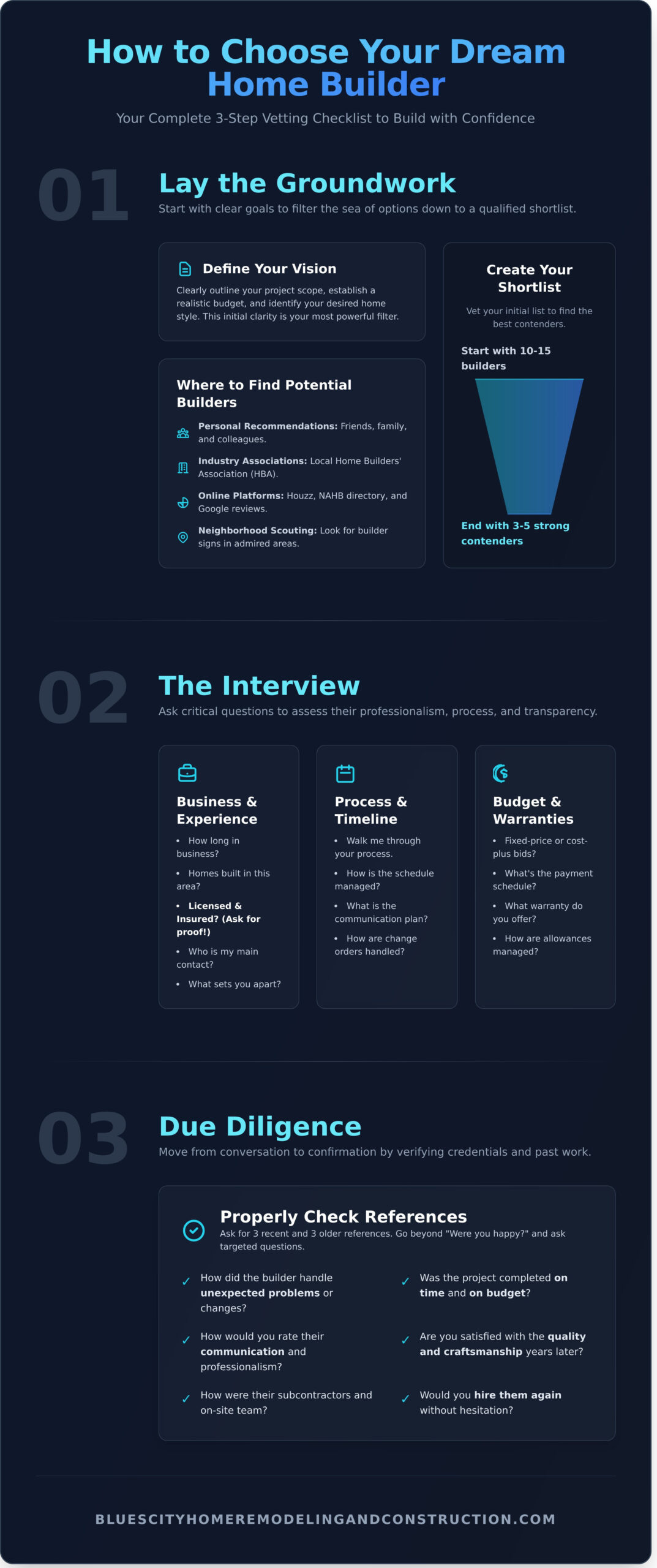
Before you can find the right partner for your dream home, you must first understand your own project. The most critical first step in learning how to choose a home builder is defining your vision. Clearly outline your project scope (approximate square footage, number of rooms), establish a realistic budget, and identify your desired home style-be it a rustic modern farmhouse or a sleek contemporary design. This initial clarity acts as a powerful filter, helping you zero in on builders who specialize in your exact type of project. The goal of this phase is to move from a sea of names to a manageable shortlist of 3-5 qualified candidates.
Where to Find Potential Builders
Your search for the perfect builder begins with casting a wide net. Compiling a strong initial list is easier than you think if you know where to look. Tap into multiple resources to ensure you don’t miss any hidden gems.
- Personal Recommendations: Ask friends, family, colleagues, or your real estate agent for trusted referrals.
- Industry Associations: Consult your local Home Builders’ Association (HBA) for a directory of vetted, professional members in good standing.
- Online Platforms: Use websites like Houzz and the National Association of Home Builders (NAHB) directory to browse portfolios and read client reviews.
- Neighborhood Scouting: Drive through areas you admire and note the builders’ signs on active custom home construction sites.
Initial Vetting: The Online Presence
A builder’s website and social media profiles are their modern-day business card. Start by reviewing their online portfolio to see if their style and quality match your vision. A basic understanding of the home construction process will help you evaluate the complexity and craftsmanship of their showcased work. Look for a professional, easy-to-navigate website and consistent positive reviews on Google and other third-party sites. An active, up-to-date online presence often signals a well-organized and client-focused business.
Creating Your Shortlist
With your research complete, it’s time to narrow the field. Start with your broad list of 10-15 builders and vet each one methodically. Immediately eliminate any with consistently poor reviews, a portfolio that doesn’t align with your goals, or a clear lack of experience with your project type. Finally, confirm the remaining candidates work in your geographical area and build within your price range. This focused process should leave you with 3-5 strong contenders ready for the next step: the interview.
Step 2: The Interview – Asking Critical Questions
Once you’ve shortlisted your top candidates, the interview stage begins. This is your opportunity to dig deeper than their portfolio. You are assessing their professionalism, communication style, and expertise. A key step in how to choose a home builder is preparing your questions in advance to ensure a productive conversation. Pay close attention not just to what they say, but how they say it. A reputable builder will be patient, transparent, and thorough in their responses.
Questions About Their Business and Experience
Start with the basics to establish their credibility and operational structure. Understanding their history and team helps you gauge their stability and who you will be working with day-to-day. Don’t hesitate to ask for documentation to back up their claims.
- How long have you been in business? How many custom homes have you built in this area?
- Are you licensed and insured in Tennessee? Ask for proof. Verifying these credentials is a critical step, as detailed in this helpful consumer protection guide to hiring a contractor from a government source.
- Who will be my main point of contact, and who will be the on-site project manager?
- What sets you apart from other custom home builders?
Questions About Their Process and Timeline
A well-defined process is the hallmark of an organized and reliable builder. These questions reveal how they manage a project from concept to completion, handle inevitable challenges, and keep you informed. A clear process minimizes surprises and stress.
- Can you walk me through your entire design-build process, from initial sketches to final walkthrough?
- How do you create and manage the project schedule to ensure we stay on track?
- How often can we expect communication, meetings, or site visits?
- What is your formal process for handling change orders?
Questions About Budget, Payments, and Warranties
Financial transparency is non-negotiable. It’s crucial to understand how your builder structures their pricing, what is included, and how payments will be handled. This is also the time to clarify the protection you have after the build is complete. A solid warranty is a sign of a builder who stands behind their work.
- How do you structure your bids? Are they fixed-price or cost-plus?
- What does your typical payment schedule look like?
- What kind of warranty do you offer on your workmanship and the materials used?
- Can you explain what allowances are and how they will be managed in our budget?
Step 3: Due Diligence – Verifying Credentials and Past Work
You’ve narrowed down your list of potential builders, but don’t just take their word for it. This verification stage is arguably the most critical part of learning how to choose a home builder. It’s where you move from conversation to confirmation, ensuring the builder is legally sound, financially stable, and capable of delivering the quality they promise. A reputable, professional builder will not only expect this scrutiny but will actively encourage it, providing all the documentation you need with complete transparency.
How to Properly Check References
Speaking with past clients provides invaluable, unfiltered insight. Ask your potential builder for at least three recent and three older references to get a full picture of their long-term quality and consistency. When you call, go beyond a simple “Were you happy?” Ask specific, targeted questions:
- How did the builder handle unexpected problems or changes?
- Was the project completed on time and on budget?
- How would you rate their communication throughout the process?
- Were you satisfied with the quality of their subcontractors’ work?
Also, request to speak with a client whose project is currently in progress to understand their real-time process.
Visiting Job Sites and Completed Homes
Seeing is believing. Ask to visit an active job site to observe their operations firsthand. A well-managed site is clean, organized, and prioritizes safety-a clear indicator of professionalism and respect for the project. Next, request a tour of a recently completed home. This allows you to inspect the details up close. Pay attention to the finish quality of the trim, paint, cabinetry, and tile work. Is the craftsmanship precise and consistent?
Verifying Licenses and Insurance
This final check protects you from significant financial and legal risk. Request proof of the builder’s licenses and insurance policies. You need to see two key documents: a certificate of general liability insurance and proof of workers’ compensation. In Tennessee, you should also verify their contractor’s license is active and in good standing with the state’s licensing board. Finally, check their rating and any filed complaints with the Better Business Bureau (BBB). This due diligence ensures you are not liable for accidents, damages, or disputes.
At Blues City Home Remodeling and Construction, we believe this level of transparency is essential for building trust and a successful partnership.
Step 4: Making the Final Decision – Comparing Bids and Trusting Your Gut
You’ve interviewed candidates, checked references, and reviewed portfolios. Now, with proposals in hand, it’s time to make your final choice. This last step is about more than just numbers; it’s about finding a true partner for one of the biggest investments of your life. The key to how to choose a home builder at this stage is to balance detailed analysis with your own intuition.
How to Compare Construction Bids
The cheapest bid is rarely the best value. To make an informed decision, ensure you’re comparing ‘apples-to-apples.’ A quality bid will include detailed line items for every phase of construction, from foundation to finishes. Vague, lump-sum estimates can hide inferior materials or an incomplete scope. Pay close attention to the allowances for items like flooring, fixtures, and countertops. A significantly lower bid might signal that a builder has underestimated costs or specified lower-grade materials, which could lead to expensive change orders later.
Assessing Communication and Personal Fit
Building a custom home is a long-term relationship that can last a year or more. Your builder will be your guide, problem-solver, and primary point of contact. Throughout the interview process, did they respond promptly and communicate clearly? Do you feel they listen to your vision and concerns? Trust your gut. You need a partner whose personality and communication style make you feel comfortable and confident, not stressed. This personal rapport is just as important as their technical skill.
Reviewing the Contract
Before you sign anything, carefully review every detail of the construction contract. This legally binding document is your project’s blueprint and your protection. A comprehensive contract should always include:
- A detailed scope of work, including all plans and material specifications.
- A firm total price and a clear payment schedule tied to construction milestones.
- Defined start and projected completion dates.
- A formal process for handling change orders and resolving potential disputes.
Understanding these details is the final, crucial step. Ready to work with a builder who checks all the boxes with transparency and professionalism? View our work.
Building Your Future: Making the Final Choice
Choosing the team that will build your home is the most significant decision you’ll make in this entire process. As we’ve covered, mastering how to choose a home builder comes down to a blend of diligent research and trusting your intuition. It’s about more than just comparing bids; it’s about verifying credentials, checking references, and ensuring their communication style aligns with yours. This thorough vetting process is your best insurance for a smooth, successful project that brings your vision to life.
If you’re looking for a partner in the Memphis and Bartlett area, we invite you to put our team to the test. Blues City Home Remodeling and Construction is a fully licensed and insured builder in Tennessee with an A+ Rating with the Better Business Bureau and decades of local experience. We are committed to transparency, quality craftsmanship, and building lasting relationships with our clients.
Your dream home is too important to leave to chance. Start planning your dream home with a trusted Bartlett builder. Contact us today. Let’s build something incredible together.
Frequently Asked Questions
What is the difference between a custom builder and a production builder?
A custom home builder creates a one-of-a-kind home, often on land you own, offering maximum flexibility in design, materials, and layout. In contrast, a production builder constructs multiple homes within a community from a limited selection of pre-designed floor plans. While production homes are generally less expensive and built faster, custom builders provide a unique home tailored precisely to your vision and lifestyle.
Should I hire an architect separately or choose a design-build firm?
Hiring an architect separately gives you an independent advocate and potentially more creative freedom with your plans. Alternatively, a design-build firm integrates the design and construction phases under one contract. This approach can streamline communication, shorten the overall project timeline, and provide better budget management from the start, as the builder and designer work together as a single, cohesive team from day one.
How important is it to hire a local home builder?
Hiring a local builder is crucial for a successful project. They have established relationships with local suppliers and subcontractors, which can lead to better pricing and more reliable scheduling. A local builder also has in-depth knowledge of regional building codes, zoning regulations, and permitting processes, helping you avoid costly delays. Their community reputation is on the line, often resulting in higher quality work and greater accountability.
What are the most common red flags to watch out for when hiring a builder?
A critical step in how to choose a home builder is recognizing red flags. Be wary of builders who give vague estimates, pressure you for a quick decision, or ask for a large upfront cash deposit. Other warning signs include an unwillingness to provide a physical address, proof of license and insurance, or a list of recent client references. Poor communication from the outset is also a major concern.
How is the payment schedule for a new home construction typically structured?
Payment is typically made through a series of “draws” tied to completing specific construction milestones, not a calendar schedule. For example, a draw might be requested after the foundation is poured, another after framing is complete, and another after the roof is on. This structure, often managed by your lender, ensures you only pay for work that has been verifiably completed, protecting your investment throughout the build.
What happens if there are unexpected costs or delays during the project?
A good contract will outline how to handle unexpected issues. Changes are managed through a formal “change order,” a written document that details the new work, its cost, and any impact on the schedule, which you must approve. It is also essential to have a contingency fund, typically 5-10% of the total project cost, set aside to cover unforeseen expenses without derailing your budget.