You’ve saved up, scrolled through endless inspiration photos, and are ready to transform your space. But a shadow of doubt looms: what if you pour thousands of dollars into a project that adds zero value when it’s time to sell? This fear of a poor return is real, and it’s why understanding home improvement ROI is absolutely crucial before you pick up a single hammer. You’re not alone in feeling confused by conflicting advice on whether a major kitchen remodel or a simple new front door offers a better payback. It’s about making a smart financial investment, not just a beautiful one.
In this guide, we’re cutting through the noise. We’ll reveal which upgrades consistently deliver the highest financial returns, helping you plan your next project for maximum value. You will gain a clear understanding of the best value-adding home projects, learn how to confidently choose a renovation that fits your budget and goals, and discover how to find a trustworthy contractor who can help turn your vision into a valuable reality.
Understanding Home Improvement ROI: More Than Just a Number
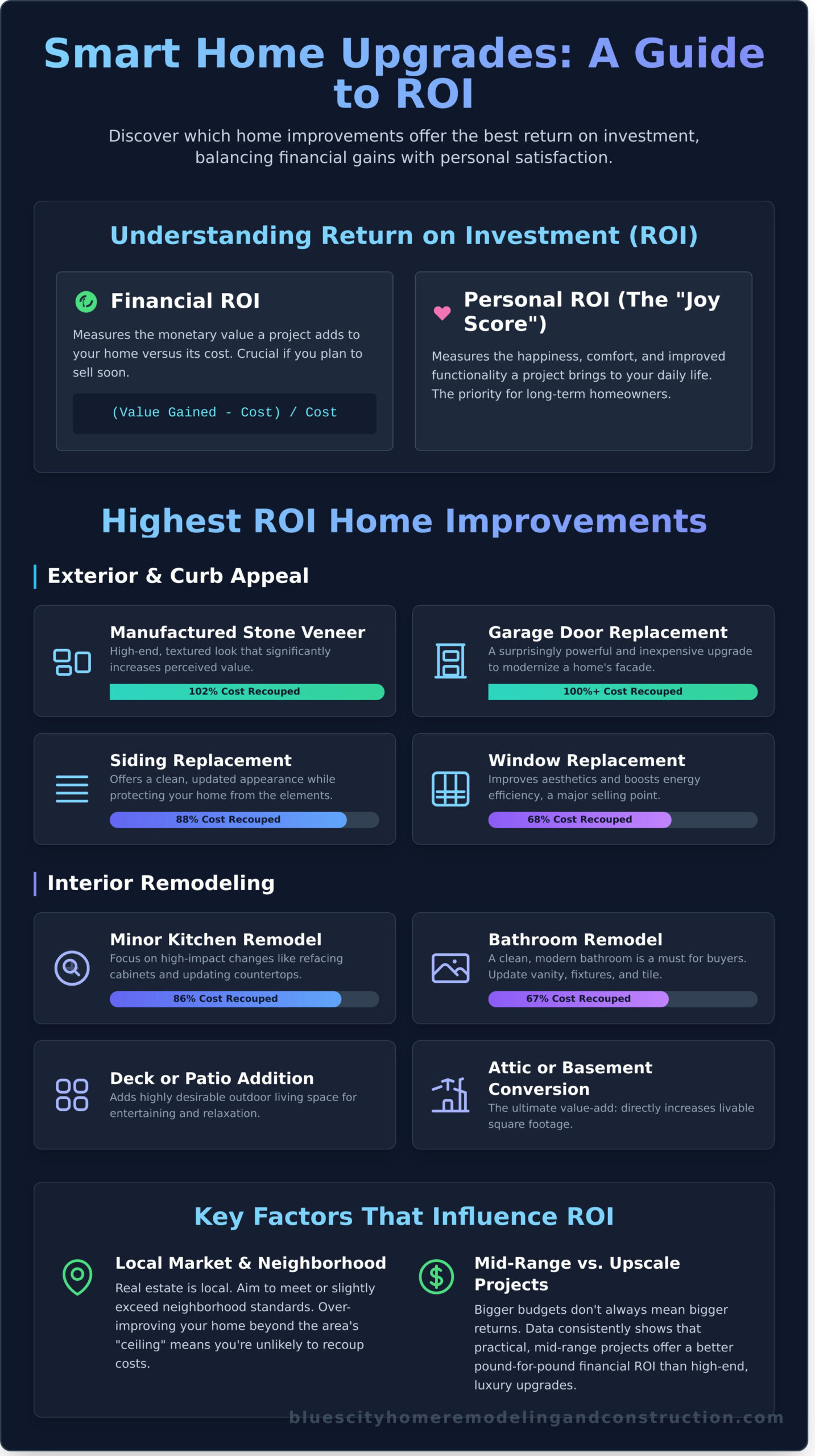
When homeowners consider a renovation, the first question is often, “Will I get my money back?” This is the core of home improvement ROI (Return on Investment). It measures the value a project adds to your home compared to its cost. While the financial calculation is straightforward, the true value of an upgrade often extends far beyond a number on a spreadsheet, encompassing both monetary gain and your daily quality of life.
How ROI is Calculated and What It Means for You
The basic financial formula for ROI is: (Value Gained – Cost of Project) / Cost of Project. For example, if you spend $15,000 on a bathroom remodel that adds $12,000 to your home’s appraised value, you’ve recouped 80% of your cost. It is crucial to set realistic expectations, as a 100% return is rare. Appraisers typically assign higher value to functional, universally appealing upgrades (like new windows) than to highly personalized ones (like a custom wine cellar). A key part of maximizing returns is understanding the renovation process itself, which helps in making smart, value-driven decisions from the start.
Financial ROI vs. Personal ROI
The best way to evaluate a project is to weigh two types of return. Which one you prioritize depends entirely on your goals, and the most successful projects deliver a healthy dose of both.
- Financial ROI: This is the metric that matters most if you plan to sell your home soon. It’s about choosing projects with a high cost-recouped percentage to maximize your sale price and appeal to the widest range of buyers.
- Personal ROI: This measures the value a project adds to your happiness. If you plan to live in your home for many years, the daily joy, comfort, and improved functionality of a new kitchen is an investment in your well-being.
Your timeline is the deciding factor. A short-term plan demands a focus on financial returns, while a long-term stay allows you to prioritize personal enjoyment, knowing the financial value will be realized many years down the road.
The Highest ROI Home Improvements (Data-Backed)
When prioritizing upgrades, data is your best friend. The goal is to select projects that not only enhance your daily life but also provide a strong financial return upon resale. While annual industry reports detail cost recouped, it’s also worth considering personal satisfaction. In fact, the National Association of REALTORS®’ Remodeling Impact Report quantifies a “Joy Score” for renovations, proving the best projects make you happy while you live there and pay you back later. The following projects consistently top the charts for delivering the best overall home improvement ROI.
Exterior & Curb Appeal Projects
First impressions are everything in real estate. Exterior projects often have the highest returns because they instantly boost a home’s curb appeal, making it more attractive to potential buyers from the moment they see it.
- Garage Door Replacement: Often recouping over 100% of its cost, a new garage door is a surprisingly powerful and relatively inexpensive upgrade. It can dramatically modernize a home’s facade.
- Manufactured Stone Veneer: Adding stone accents to the entryway or lower third of your home provides a high-end, textured look that significantly increases perceived value, with a cost recouped often near 102%.
- Siding Replacement: New siding (fiber-cement or vinyl) offers a clean, updated appearance while also protecting your home from the elements. This dual benefit results in a strong return, typically around 88%.
- Window Replacement: While a larger investment, new vinyl or wood windows improve aesthetics and boost energy efficiency-a major selling point for buyers. Expect to recoup around 68% of the cost.
Interior Remodeling Projects
Inside the home, strategic updates to key areas like kitchens and bathrooms offer the most bang for your buck. The key is to focus on functional, modern improvements with broad appeal.
- Minor Kitchen Remodel: The key word is minor. Instead of a full gut, focus on high-impact changes like refacing cabinets, swapping countertops, and updating hardware and appliances. This can yield a return of nearly 86%.
- Bathroom Remodel: A clean, modern bathroom is a must for buyers. Updating the vanity, fixtures, and tile can transform the space and typically recoups about 67% of the investment.
- Deck or Patio Addition: Creating a dedicated outdoor living space is a highly desirable feature. A new wood or composite deck adds functional square footage for entertaining and relaxation, boosting lifestyle and property value.
- Attic or Basement Conversion: The ultimate value-add is creating more livable space. Converting an attic or basement into a bedroom or living area directly increases your home’s square footage, a primary driver of its market price.
Factors That Influence Your Remodeling ROI
While national reports provide a helpful baseline, it’s crucial to understand that home improvement ROI is not a fixed number. The actual return on your investment can swing dramatically based on several key variables, from your zip code to the quality of the caulk used in your new bathroom. Before you start swinging a sledgehammer, consider these critical factors.
The Importance of Local Market & Neighborhood Comps
Real estate is, and always will be, local. A project that’s a guaranteed winner in a bustling suburb like Bartlett, TN, might fall flat in a different market. Your primary goal is to meet or slightly exceed neighborhood standards-not to build the Taj Mahal on a block of bungalows. Over-improving your home beyond the “neighborhood ceiling” means you’re unlikely to recoup your costs. Research recently sold homes (comps) in your area to see what features buyers expect. Understanding regional construction activity, which is tracked in resources like the U.S. Census Bureau Building Permits Survey, can also provide valuable context on what upgrades are currently in demand.
Mid-Range vs. Upscale Projects
Bigger budgets don’t always equal bigger returns. In fact, data consistently shows that mid-range projects offer a better home improvement ROI than high-end, luxury remodels. Buyers expect a clean, functional, and updated space. They are less likely to pay a premium for your personal taste in ultra-luxury, niche features. For example, a thoughtfully updated kitchen with quality stock cabinets, durable countertops, and new energy-efficient appliances will appeal to more buyers than an overly customized chef’s kitchen with a $15,000 imported range.
Quality of Workmanship: The Non-Negotiable Factor
There is one area where you should never cut corners: the quality of the work itself. Shoddy craftsmanship, from uneven tile to sloppy paint jobs, can actively decrease your home’s value and scare off potential buyers. Professional installation ensures your upgrades are durable, safe, and up to code. Failing to pull the proper permits can create major headaches during a sale. Investing in a reputable, licensed contractor is the single most important step you can take to protect your home’s value and ensure your project is a true asset.
Projects With Low Financial ROI (But High Personal Value)
Not every upgrade is about the bottom line. Some projects are driven by passion, lifestyle, and a desire to make your house truly your home. While these improvements may not offer a high financial return at resale, their value comes from the daily enjoyment they provide. If you plan on staying in your home for many years, these “passion projects” can be the most rewarding investments you make, even if they have a poor home improvement ROI on paper.
Luxury & Niche Upgrades
Highly personalized and luxury features often have a narrow appeal, making them a gamble when it’s time to sell. What one person sees as a dream feature, a potential buyer might see as a costly maintenance burden or a reason to submit a lower offer.
- Swimming Pools: While appealing in some climates, pools come with significant costs for maintenance, insurance, and safety. Many buyers are deterred by the ongoing expense and responsibility.
- Elaborate Landscaping: A custom koi pond or extensive perennial garden may be your personal oasis, but a buyer might view it as a time-consuming and expensive upkeep project they don’t want.
- High-End Home Theaters: Dedicated media rooms with built-in tech can be fantastic, but technology becomes outdated quickly, diminishing the value of the initial investment.
- Bedroom Conversions: Turning a bedroom into a massive walk-in closet or a home gym reduces your home’s official bedroom count, which can significantly lower its value and appeal to families.
Invisible Improvements
Some of the most critical and expensive upgrades are the ones buyers can’t see. While essential for a safe and functional home, “invisible” improvements are considered baseline expectations, not value-adding features. Buyers expect a working furnace and sound plumbing; they won’t pay a premium for them. Think of these as protecting your investment, not increasing its sale price. Upgrades like a new HVAC system or updated electrical wiring are crucial for your comfort and safety but have a minimal impact on your overall home improvement ROI.
Ultimately, the right project depends on your goals. Whether you’re maximizing value for a future sale or creating your forever home, expert planning is key. The team at Blues City Home Remodeling and Construction can help you navigate your options to make the best choice for your home and family.
How to Plan a Remodel for Maximum Return on Investment
A successful remodel that boosts your home’s value doesn’t happen by chance. It requires a strategic approach focused on smart decisions from start to finish. Following a clear framework ensures every dollar you invest works harder for you, maximizing your overall home improvement ROI.
Step 1: Define Your Goals and Budget
First, clarify your primary motivation. Are you selling in the next 1-2 years or staying for a decade or more? This decision guides every choice. Next, build a detailed budget with a crucial 10-15% contingency fund for surprises. To keep your project on track:
- Define your timeline: A short-term plan focuses on broad appeal, while a long-term plan allows for more personalization.
- Prioritize needs over wants: Fix a leaky roof before adding a luxury steam shower.
- Research local costs: Ensure your budget aligns with market rates in your area to stay realistic.
Step 2: Choose the Right Projects and Materials
With your goals in mind, select projects known for high returns, like minor kitchen remodels or new garage doors. When choosing materials, think timeless, not trendy. Opt for durable, high-quality finishes in neutral color palettes that appeal to a wide range of buyers. For example, classic subway tile and quartz countertops have more lasting appeal than bold, patterned backsplashes that may quickly date the space. Focus on improving your home’s function, flow, and natural light.
Step 3: Hire a Professional Contractor
The right partner is crucial for protecting your investment. Your search should focus on contractors who are fully licensed, insured, and have a strong portfolio of local work. Always check references, read online reviews, and get detailed quotes from multiple companies. A great contractor does more than just build; they help you value-engineer the project, making smart substitutions that improve your return without sacrificing quality. This expertise is key to a successful project.
Careful planning is the foundation of a renovation that pays off. Let’s discuss how to maximize the value of your next project.
Maximize Your Home’s Value with Strategic Renovations
Choosing the right home improvement project is a blend of financial savvy and personal satisfaction. As we’ve explored, upgrades with a high return-like a new garage door or a minor kitchen remodel-often focus on curb appeal and functionality. However, it’s also crucial to remember that the true value of an upgrade isn’t always measured in dollars; the personal joy a new space brings is a return in itself. Ultimately, strategic planning is the key to balancing these factors and achieving the best possible home improvement ROI.
If you’re in the Bartlett or Memphis, TN area and ready to make a smart investment in your property, the experienced team at Blues City is here to guide you. As trusted home addition and remodeling experts, we are laser-focused on quality craftsmanship and customer satisfaction, ensuring your project not only meets but exceeds your expectations.
Ready to plan a smart home renovation? Contact Blues City for a consultation. Let’s work together to unlock your home’s full potential.
Frequently Asked Questions
Which home improvement has the absolute best ROI?
While it varies by region, projects that enhance curb appeal consistently deliver the highest returns. A new garage door replacement often recoups over 100% of its cost. Other top performers include manufactured stone veneer on the home’s exterior and minor kitchen remodels. These upgrades focus on making a powerful first impression on potential buyers without the expense of a full-scale renovation, providing a significant boost to your home’s perceived value for a relatively low cost.
What is the worst home improvement for resale value?
The worst investments are typically highly personalized or luxury upgrades that don’t appeal to a broad range of buyers. Installing a swimming pool is a classic example, as many potential homeowners view it as a costly maintenance liability rather than an asset. Other low-return projects include elaborate home theaters, dedicated wine cellars, or overly lavish master suite renovations. These projects rarely recoup more than 50% of their initial cost when you sell the home.
Is it better to remodel the kitchen or bathroom for the best ROI?
Both kitchen and bathroom remodels are excellent choices, but a minor kitchen remodel often has a slight edge for pure financial return. The kitchen is the heart of the home, and an updated, functional space strongly influences buyers. However, a severely outdated bathroom can be a major deterrent. For the best overall home improvement ROI, assess which room is in worse condition and will make the biggest positive impact on your home’s overall appeal and functionality.
How much should I spend on a remodel to get a good return?
A smart rule of thumb is to spend no more than 5% to 15% of your home’s total value on a single room remodel. For a $400,000 home, you should cap a major kitchen overhaul at around $60,000. It is also critical to avoid over-improving for your neighborhood. Your home’s value is limited by comparable properties nearby, so ensure your upgrades align with local standards to maximize your potential for a positive return on investment.
Do you get your money back on a home addition?
You will likely not recoup the full cost of a home addition, but it can significantly increase your home’s overall value and appeal. Most homeowners recover between 50% and 70% of the construction cost upon resale. The return depends on the type of addition, such as a master suite versus a sunroom, and the average cost per square foot in your local market. While not a dollar-for-dollar return, adding functional living space is a powerful way to boost marketability.
How can I improve my home value with a very small budget?
You can make a huge impact on a small budget by focusing on cosmetic fixes. Start with curb appeal: power wash the exterior, mow the lawn, and apply a fresh coat of paint to the front door. Inside, a fresh coat of neutral paint is one of the cheapest, most effective upgrades available. Also, consider swapping out dated cabinet hardware, light fixtures, and faucets for modern alternatives. A deep, professional cleaning can make the entire home feel newer and more valuable.