Dreaming of building a custom home is one of life’s most exciting ventures, but the path from a plot of land to a front door can feel incredibly daunting. You have a vision, but the sheer number of decisions-from architects and builders to permits and budgets-can be paralyzing. The world of new home construction is filled with complexities that often leave future homeowners wondering where to even begin, who to trust, and how to protect their investment.
That’s where this guide comes in. We’re here to turn that overwhelming feeling into confident action. Consider this your clear, step-by-step roadmap, designed to demystify the entire process from the first sketch to your final move-in day. We’ll break down each phase, clarify the roles of key professionals, and provide the insights you need to make smart financial and design decisions. By the end, you’ll not only understand the journey ahead but feel empowered to build the dream home your family deserves, on time and on budget.
Phase 1: Vision, Budgeting, and Financing Your New Home
Before a single shovel of dirt is moved, the most critical work of your custom home project begins. This initial phase is all about laying a solid foundation-not with concrete, but with a clear vision, a comprehensive budget, and secure financing. It’s where your dream home transitions from an idea into an actionable plan, setting the stage for a successful new home construction experience.
Defining Your Dream Home: Needs vs. Wants
The first step is to translate your vision into tangible details. Start by separating your absolute must-haves from your nice-to-haves. This clarity prevents scope creep and budget issues down the line. Consider these key areas:
- Non-Negotiables: List your core requirements, such as the minimum number of bedrooms and bathrooms, approximate square footage, and a one- or two-story layout.
- Lifestyle Considerations: How will you live in the space? Think about your daily routines and long-term goals. Do you need a dedicated home office, a gourmet kitchen for entertaining, or a main-floor primary suite for aging in place?
- Inspiration: Gather ideas for architectural styles, color palettes, and finishes. Create mood boards on platforms like Pinterest to visually communicate your aesthetic to your design and build team.
Establishing a Realistic Budget
A realistic budget is the backbone of any successful build. It must account for every potential expense, not just the visible structure. A complete financial picture includes:
- Hard Costs: These cover the physical construction, including all labor, materials, foundation, framing, and finishes.
- Soft Costs: These are the indirect expenses, such as architectural design fees, engineering services, surveys, permits, and loan interest during construction.
- Land Cost: Factor in the purchase price of your lot if you don’t already own it.
- Contingency Fund: Crucially, set aside an extra 10-15% of your total budget. This fund covers unforeseen challenges, preventing delays and financial stress.
Securing a Construction Loan
Financing a custom build differs significantly from buying an existing home. Instead of a standard mortgage, you’ll likely need a construction loan. These short-term loans cover the costs of the build and are paid out to your builder in stages, or “draws,” as work milestones are completed. Understanding this financial instrument is a key part of The Home Building Process and ensures a smooth project flow. Lenders typically require a strong credit score, a detailed set of plans, and a signed contract with a reputable builder. Once construction is finished, the loan is converted into a traditional, long-term mortgage.
Phase 2: Assembling Your Professional Team
Building a custom home is a significant undertaking, and it’s a team sport. The success of your project hinges on the expertise, communication, and collaboration of the professionals you hire. Choosing your players wisely is one of the most critical steps in the entire process, ensuring your vision is executed flawlessly from blueprint to final build.
The Key Players: Who Does What?
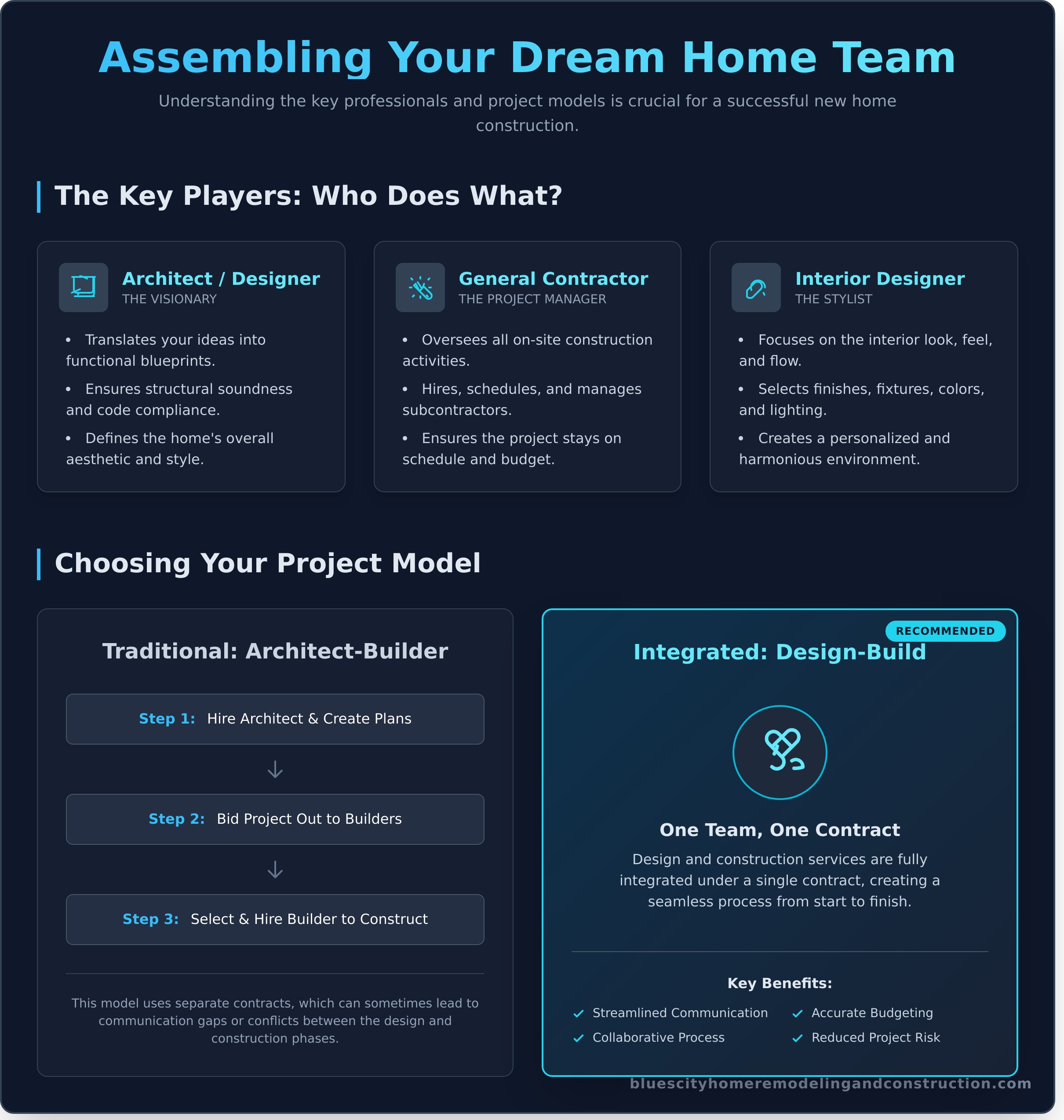
Understanding the distinct roles of each professional will help you build a cohesive team. While some roles may overlap, especially in smaller projects, these are the core players you’ll need:
- The Architect/Designer: This is the visionary who translates your ideas into a functional set of blueprints. They ensure the home is structurally sound, compliant with building codes, and aesthetically pleasing.
- The General Contractor (GC)/Builder: The GC is the on-the-ground project manager. They oversee the entire construction, hire and manage subcontractors, source materials, and are responsible for keeping the project on schedule and within budget.
- The Interior Designer: This expert focuses on the look and feel of your home’s interior. They guide you in selecting finishes, fixtures, lighting, and furnishings to create a personalized and harmonious environment.
How to Choose the Right Home Builder
Your general contractor is your primary partner in the new home construction process, so a relationship built on trust and clear communication is essential. When vetting potential builders, look beyond the price quote. Due diligence at this stage prevents major headaches later.
- Look for a builder with extensive local experience and a strong portfolio of homes similar to your desired style.
- Verify that they are licensed, bonded, and fully insured in your state.
- Ask for and contact references to inquire about their experience with communication, budget management, and overall quality.
- Inquire about their project management and communication process to ensure it aligns with your expectations.
Understanding Design-Build vs. Architect-Builder Models
You have two primary options for structuring your professional team. The traditional Architect-Builder model involves hiring an architect to create plans and then bidding the project out to builders. Alternatively, the Design-Build model consolidates both design and construction services under a single contract. This integrated approach can streamline communication and create more accurate budget forecasts, which is a major benefit when arranging the financing for your new home. It often leads to a more collaborative and efficient build, reducing the risk of costly conflicts between the design and construction phases.
Phase 3: Design, Selections, and Pre-Construction
With your team assembled and budget defined, this is where your vision truly takes shape. Phase 3 is an exciting and detail-oriented stage where abstract ideas are translated into concrete plans, and every choice contributes to the final look and feel of your home. This is the critical bridge between dreaming and doing in the new home construction process.
From Conceptual Sketches to Final Blueprints
Your architect or designer will guide you through a multi-stage design process to create the master plan for your home. This typically includes Schematic Design, where the floor plan and exterior concepts are developed; Design Development, where these initial plans are refined with structural details and material specifications; and finally, the creation of Construction Documents-the final, detailed blueprints your builder will use for permitting and construction.
The Selections Process: Defining Your Home’s Style
Alongside the architectural design, you will make key decisions on the materials and finishes that define your home’s character. This comprehensive process involves choosing everything from the ground up, inside and out. Key selections include:
- Exterior Choices: Roofing material (asphalt shingle, metal, tile), siding or brick, window styles, and the main entry door.
- Interior Finishes: Flooring (hardwood, tile, carpet), cabinetry for the kitchen and bathrooms, countertop materials (granite, quartz), and paint colors.
- Fixtures and Appliances: Plumbing fixtures like faucets and sinks, lighting packages, and your complete kitchen appliance suite.
Permitting and Site Preparation
Once the blueprints are finalized, they are submitted to your local building department for approval. The permitting process ensures your home meets all safety, zoning, and building codes. Navigating these early administrative steps correctly is a cornerstone of planning a successful home build, preventing costly delays. Concurrently, your land is prepared for construction. This involves crucial steps like land surveys, soil tests to assess ground stability, clearing the lot, excavation for the foundation, and establishing connections for utilities like water, sewer, and electricity.
Phase 4: The Construction Journey from Foundation to Finishes
Welcome to the most tangible and transformative stage of your custom home build. This is the longest phase, where blueprints and plans leap off the page and become a physical structure. Witnessing your home take shape from the ground up is an incredibly rewarding experience. Regular communication and scheduled site visits with your builder are crucial during this period to ensure every detail aligns with your vision. This phase is the heart of the new home construction process, turning dreams into your new address.
Site Work, Foundation, and Framing
After the lot is cleared and prepared, the first major step is pouring the concrete footings and foundation. This forms the solid base upon which your entire home will rest. Soon after, the framing crew arrives to build the home’s “skeleton”-the floor systems, walls, and roof structure. This is a milestone moment, as you can finally walk through the rooms and get a true sense of the home’s scale, layout, and flow.
Rough-Ins and Closing Up the Exterior
With the frame in place, work begins inside the walls. This is the “rough-in” stage, where licensed tradespeople install the essential systems: plumbing pipes, electrical wiring, and HVAC ductwork. Simultaneously, the exterior is closed up with sheathing, roofing, windows, and exterior doors. At this point, the house is considered “dried-in,” meaning it’s protected from the elements, allowing interior work to proceed efficiently regardless of the weather.
Interior Finishes and Drywall
Now, the interior spaces truly begin to emerge. Drywall is hung, taped, and finished, creating the smooth walls and ceilings of your home. Following this, the finish carpenters install trim, interior doors, baseboards, and cabinetry. This is also when your design selections come to life as painters apply your chosen colors and installers begin laying flooring and setting tile in bathrooms and kitchens.
Final Touches and Exterior Completion
The final stretch involves installing the details that make a house a home. This is a busy period where many elements come together, including:
- Installation of countertops, light fixtures, and plumbing fixtures (sinks, faucets, toilets).
- Hooking up appliances and completing final mechanical system checks.
- Finishing exterior elements like siding, stone, or brick.
- Final grading of the property, followed by the pouring of driveways and walkways, and landscaping installation.
A well-coordinated construction phase is critical for a successful outcome. To see how an experienced team manages the complexities of new home construction, learn more about our process at bluescityhomeremodelingandconstruction.com.
Phase 5: The Final Walk-Through, Closing, and Move-In
You’ve reached the final and most rewarding phase of your journey. The dust has settled, the paint is dry, and the finish line is in sight. This is where your vision becomes a reality, and the house officially becomes your home. It’s a time for meticulous review, final paperwork, and, most importantly, getting your keys.
The Punch List and Final Walk-Through
Before the final handover, you and your builder will conduct a final walk-through. During this meeting, you’ll create a “punch list”-a documented list of any items that need correction. These are typically minor cosmetic issues, such as a paint scuff on a wall, a sticky cabinet door, or a missing piece of trim. Your builder will systematically address every item on this list to ensure the home meets your agreed-upon standards of quality.
Certificate of Occupancy and Final Closing
Once all work is complete and has passed final inspections, the local building authority will issue a Certificate of Occupancy (CO). This official document certifies that your home is safe, compliant with all building codes, and ready for you to move in. With the CO in hand, you’ll proceed to the final closing, where your construction loan is converted into a permanent mortgage, all final payments are made, and you officially take ownership. This is the moment you’ve been waiting for-receiving the keys to your brand-new home.
Your Home Warranty and Life in Your New Home
A reputable builder stands behind their work, and a home warranty is a critical component of any quality new home construction project. This warranty provides peace of mind by protecting you against defects in workmanship and materials. While specifics vary, most builder warranties offer tiered coverage, such as:
- 1-Year Warranty: Covers workmanship and materials, including items like siding, drywall, and paint.
- 2-Year Warranty: Covers major systems like plumbing, electrical, and HVAC.
- 10-Year Warranty: Covers major structural components of the home, like the foundation and framing.
Navigating the new home construction process is a significant undertaking, but the result is a home built just for you. Ready to start your journey? Let’s build your dream home together.
Your Dream Home Awaits: Embark on Your Construction Journey
Building a custom home transforms a personal vision into a tangible reality. As we’ve explored, the process is a well-defined journey, from initial budgeting and design to the final finishing touches. Success hinges on two key elements: meticulous planning and assembling a professional team you can trust to guide you through every phase. The path of new home construction is intricate, but with the right partner, it becomes an exciting and deeply rewarding adventure.
As experienced custom home builders in Bartlett, TN, and the greater Memphis area, we are committed to making that adventure a seamless one. Our dedication to quality craftsmanship and professionalism is reflected in our status as an A+ BBB Accredited Business. We don’t just build houses; we build lasting homes and relationships. If you’re ready to turn your dream into an address, we’re here to help.
Start planning your custom home in the Memphis area. Contact us for a consultation.
Frequently Asked Questions
How long does it take to build a new custom home from start to finish?
On average, building a custom home takes between 12 to 18 months. This timeline is typically split into two phases. The pre-construction phase, which includes architectural design, engineering, selections, and permitting, can take 3 to 6 months. The actual construction phase then follows, usually lasting another 9 to 12 months. Factors like home complexity, weather delays, and the efficiency of your building team can influence the final timeline.
What is the difference between a custom home and a production (or tract) home?
A custom home is a one-of-a-kind house designed and built for a specific client on their own land. You have complete control over the layout, materials, and finishes. In contrast, a production home is built by a developer who owns a large tract of land and offers a limited selection of pre-designed floor plans. While you might be able to choose some finishes, the structural options and overall design flexibility are significantly restricted.
Can I make changes to the plan once construction has started?
Yes, changes can be made, but they can be costly and cause significant delays. Any deviation from the original plan requires a formal “change order,” which documents the new work and its associated cost. Making changes after a stage is complete, such as moving a wall after framing and electrical are done, is far more expensive than finalizing all decisions during the design phase. We always recommend locking in your plan before breaking ground.
How involved do I need to be in the day-to-day construction process?
Your builder and project manager will handle the day-to-day operations, so you don’t need to be on-site daily. However, your involvement is crucial for making timely decisions on selections like flooring, fixtures, and paint colors to avoid delays. Plan for regular communication and scheduled site meetings with your builder. This ensures you stay informed and can provide necessary input without disrupting the workflow of the construction crews.
What are the most common unexpected costs in new home construction?
The most common unexpected costs in new home construction often relate to site preparation. Issues like hitting rock during excavation, needing extensive soil remediation, or bringing utilities to a rural lot can add up. Other potential costs include material price fluctuations and any changes you request after construction begins. It is essential to have a contingency fund, typically 10-15% of the total build cost, set aside to cover these unforeseen expenses.
How do I find and purchase the right piece of land for my new home?
Start by working with a real estate agent who specializes in land purchases. They can help you identify suitable lots based on your budget and desired location. Before closing, perform thorough due diligence. This includes a land survey to verify boundaries, a soil percolation test for septic systems, and confirming access to utilities like water and power. Also, verify local zoning regulations and covenants to ensure you can build the home you envision.